Categories
Reviews

Sonic the Hedgehog – Review

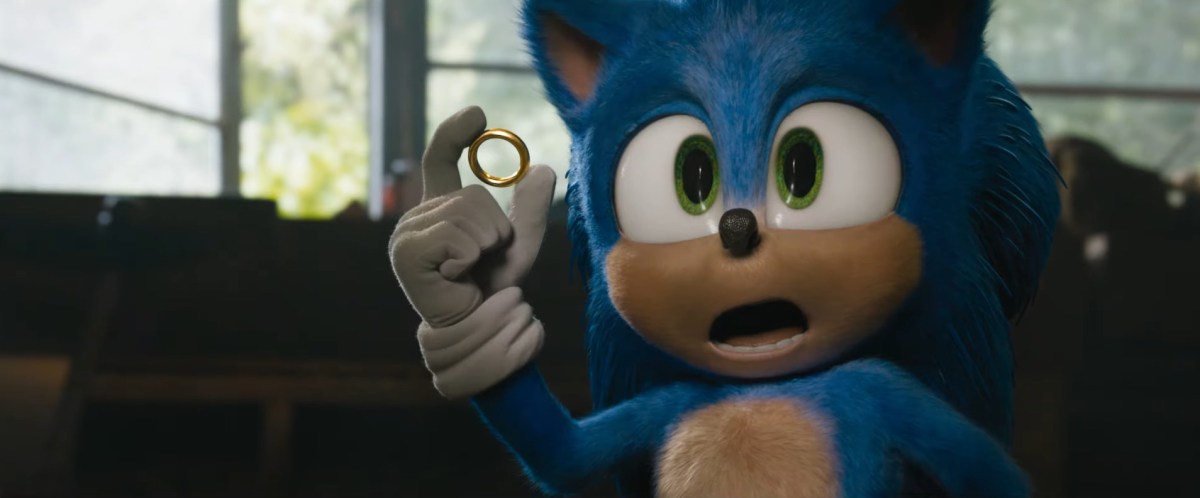
A week or two before Sonic the Hedgehog was released, I started seeing ads on buses that featured Sonic standing across from Jim Carrey’s Dr. Robotnik, subtitled “Chillin’ Vs. Villain.” This confused me, because, if you’ll pardon my pedantry: “Chillin’” is, more or less, the polar opposite of Sonic’s whole deal. I’ve no great affinity for the character or the games he’s from, but as I understand it, Sonic’s primary drive, his id if you will, is not chillin’, but going fast. I didn’t think much more of it because it’s the year of our Lord 2020 and I’ll be damned if I lose sleep over Sonic, but the ads still threw me off until I saw the movie last night. It was no error, I realized, but a premonition, a harbinger for a film whose entire M.O. consists of throwing spaghetti at a wall to see what sticks. Yes, it’s only there because it rhymes and has the same psychic footprint as a catchphrase. Much like the slightly grating ambiguity of “Chillin’ Vs. Villain,” Sonic the Hedgehog feels like it was created by several dozen different committees, hand-designed to momentarily divert your attention and then pull away. Here’s the thing, though; I’ve clearly retained “Chillin’ Vs. Villain.” I cannot suspect, given one week’s time, I’ll be able to say the same about Sonic. 

The movie opens at a suitably breakneck pace, tearing through what felt like either five or fifty minutes of exposition to explain how Sonic, a space alien (?), gets hunted for his speed (?), watches his mother (?) die (?), and then ends up on Earth. Sure, I guess, why not. Scared of being captured, Sonic (Ben Schwartz) watches the humans of Green Hills, Montana, from afar, until one night he runs around a baseball diamond so fast it blacks out the electricity in the continental United States (??) and must seek help from a stranger he’s grown fond of, James Marsden’s Sheriff Tom Wachowski. This is about all the plot you’ll get, though, because Sonic the Hedgehog is less a movie and more like a collection of ingredients thrown into a tumble dryer: An inexhaustible arsenal of ten-second poignant music clips, dropped in for the appropriate ten seconds whenever a character says something serious. Two separate uses of the “yeah, that’s me” freeze frame. Sonic mimicking the Quicksilver thing where he freezes time and gets into shenanigans. Sonic saying a quip that often, but not always, holds relevance to his current situation. Sonic doing a Fortnite dance. 

There is precisely one unmitigated bright spot in Sonic the Hedgehog, and you’ll get no points for correctly guessing it, because obviously it’s Jim Carrey, who drops back into Ace Ventura territory to play the smirking Dr. Robotnik exactly how you’d expect him to, and against all odds, the schtick stays amusing. Carrey is, if nothing else, a technician, and his preternatural control over his vocal and facial musculature is in full bloom here, and while Robotnik isn’t anything new, his twitchy megalomania is the only consistently entertaining part of the movie. I suspect that sometime during production, the team recognized this, too, and started giving Carrey as much of the spotlight as they could. From costumes, Robotnik gets gloves with remote control buttons on the palm, a device Carrey uses with self-evident glee. From design and VFX, Robotnik gets his robots, sleek white and red drones that serve as matryoshka dolls for increasingly smaller and deadlier drones, in the movie’s only real visual flair. From the script and casting departments, Robotnik gets a straight man to bounce off, as well as the only lines with any wit to them (“I see you’ve taken a lover. Does she have a name, or shall we just call her collateral damage?”). There’s even a scene where Robotnik has to compile some data, and we could have done another scene in the interim or just made the compiling instantaneous, but instead we’re just treated to a few minutes of Carrey barreling the camera as he dances on a holo-deck. 
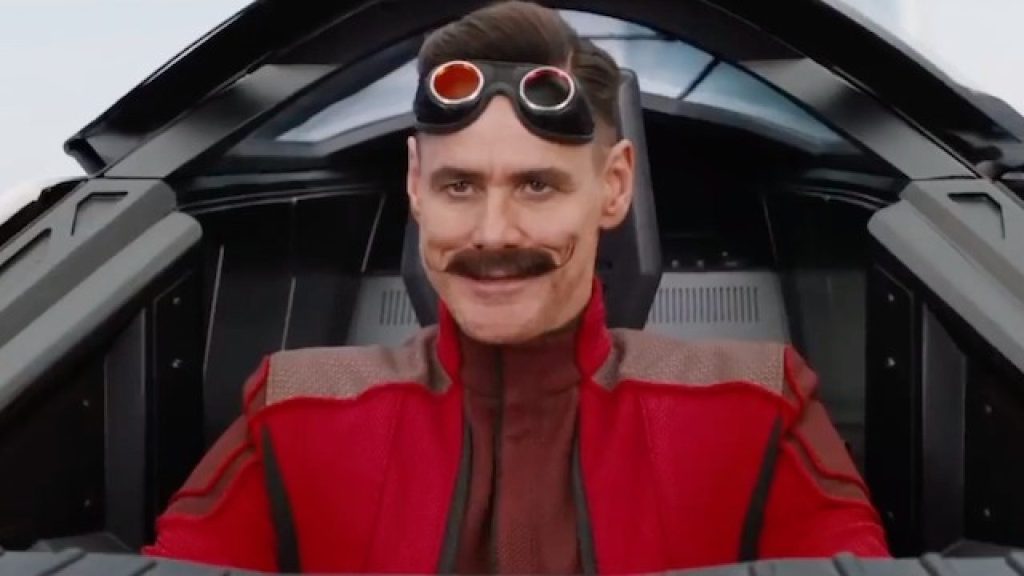
Jim Carrey as Dr. Robotnik.

He can’t hold up the entire movie on his own, though, which is an especial shame because he’s really, really trying to. Every time Robotnik is absent, Sonic slows to a crawl. There’s no script, just a collection of actors taking turns to say something sarcastic. Despite all the VFX work done, there’s little of interest to see at any point, and even despite a dramatic eleventh-hour redesign Sonic himself just looks…fine. Whatever. It’s fine. If it feels like I’m scrounging for things to talk about, it’s because I am, so much so that I apparently had to open this review describing an ad I saw on a bus. I wish Sonic the Hedgehog was either a better or a worse movie, because then I can find some kind of foothold to talk about it; as it stands now, it’s barely functional and that’s it, absolute kryptonite for a review and worse for a viewer. It’s not fun, but it’s not offensive. It’s not dull, but it’s not clever either. Sonic kind of just shows up. This is the only movie I can remember falling asleep during. 

And that, I think, is what I resent about it. I was a child once, and am now an adult; I know what comes from optimism, and especially optimism by way of video game movies. But the bare minimum I ask of any given film is for it to entertain me, and Sonic just doesn’t. When the initial design was first released, muscular calves and human teeth and all, I was shocked and repulsed just like the rest of you, but I was also distinctly excited to see what possibly could come of this horrid little creature. Maybe 1993’s uncanny Super Mario Bros. would finally have an answer from across the digital aisle. But if you’ll pardon the following turn of phrase, Sonic has been neutered, along with anything, good or bad, that could be considered engaging, in favor of what is acceptable. And sure, yes, maybe I’m a grouch complaining that the brightly colored video game movie for kids didn’t live up to my personal criteria for Art. Perhaps it’s wrong of me to expect engaging things from this. Except no, it isn’t; remember The LEGO Movie? Or heck, if we’re talking about brightly colored video game movies for kids, remember Wreck-It Ralph? It’s difficult, but possible, to hammer and reshape product placement into something innovative and poignant. The worst part of Sonic the Hedgehog is that it doesn’t even try.
Categories
Reviews

Harley Quinn: Birds of Prey – Review

After uninspired but entertaining entries like Shazam and Aquaman and dour and useless movies like Man of Steel and Joker, DC seems to have realized that for comic book movies, the path of least resistance (and, commonly, the path of better movie) is prioritizing entertainment. Pick your tone however you’d like, but you’ll get more whizz-bang for your buck if your hero/villian eschews embodying any given philosophy in favor of punching real good or whatever, especially considering The Dark Knight and the Watchmen HBO series have already pretty effectively plumbed the depths of superhero philosophy and we might as well stop trying. (Looking squarely at you, The Boys. Please stop trying.) I don’t mean to sound bitter, though I almost certainly do; I think I’m just burnt out by an awful lot of posturing superhero movies about moral responsibility with nothing of value to say, and it’s nice to see Harley Quinn: Birds of Prey getting back to the basics and consisting almost exclusively of people punching real good or whatever. Sure, it’s a tale full of sound and fury signifying nothing, but truly, what kind of ontological sourpuss nerd would be here asking what it signifies? 

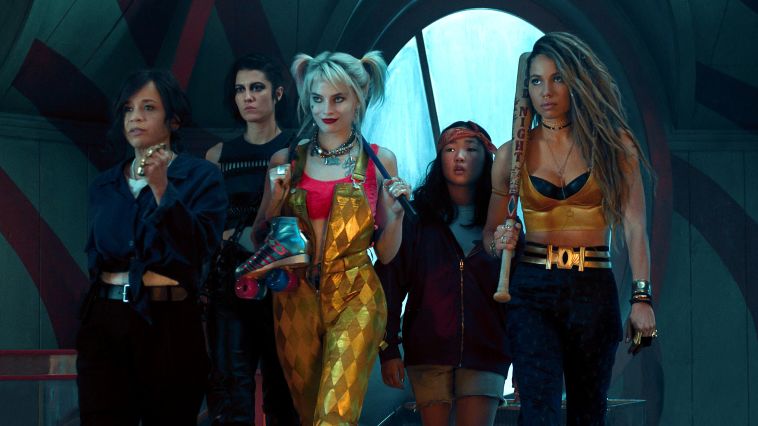
The question of DC’s best movie is probably better left to a different breed of ontological sourpuss nerds, but Birds of Prey is by far its most exuberant, a figurative and occasionally literal explosion of color made by a team openly having the time of their lives. Plot points don’t always hold up under later scrutiny, or really even present scrutiny, but you won’t have long to mull them over before the movie sweeps you away. Ostensibly, Birds of Prey is about Harley Quinn, criminal psychologist turned just criminal, picking up the pieces in the wake of a nasty dumping from the Joker. This is more elevator pitch than plot, though; the movie is just as ready to be free of Jared Leto’s Joker as we all are, and within roughly fifteen minutes it drops the pretense and reveals its true purpose: providing Harley & Co. a cavalcade of setpieces to crash around in, a task it approaches with aplomb. Birds of Prey is unafraid to lean into its comic book origins, featuring frequent narration from its title character and painting the screen with neon colors and subtitles detailing Harley’s enemies’ name and potential grievances in a gag that never really stops being funny. The many fight scenes are frequent highlights, too; a few are obscured by darkness and shaky cam, but the majority we get to see are manic, bone-crunching, and quite a lot of fun. One particular sequence in a police impound lot stands par excellence alongside the Raid and John Wick films as a sterling example of the ruin you can visit upon a human body with various household objects. 

Despite its clear excitement to be here, Birds of still falls Prey to many of its genre’s common pitfalls. For one, it’s overstuffed with characters; one major player introduced an hour and a half in rather astutely notes “I feel like I’ve wandered into something that isn’t really about me.” I assume this is because the audience is supposed to know these characters already: Jurnee Smollet-Bell’s character apparently has superpowers that I certainly didn’t know about but all the characters did; Ewan McGregor’s character, Black Mask, puts on a black mask, and you can feel the movie elbow your ribs and whisper into your ear “that’s Black Mask.” If you’re not up on your prereq reading, it’s easy to lose track, in part because few of these characters have many distinguishing traits beyond 1) “quips” and 2) “kicks ass,” and anyways, none of them quip quite as well or kick nearly as much ass as Harley herself. 

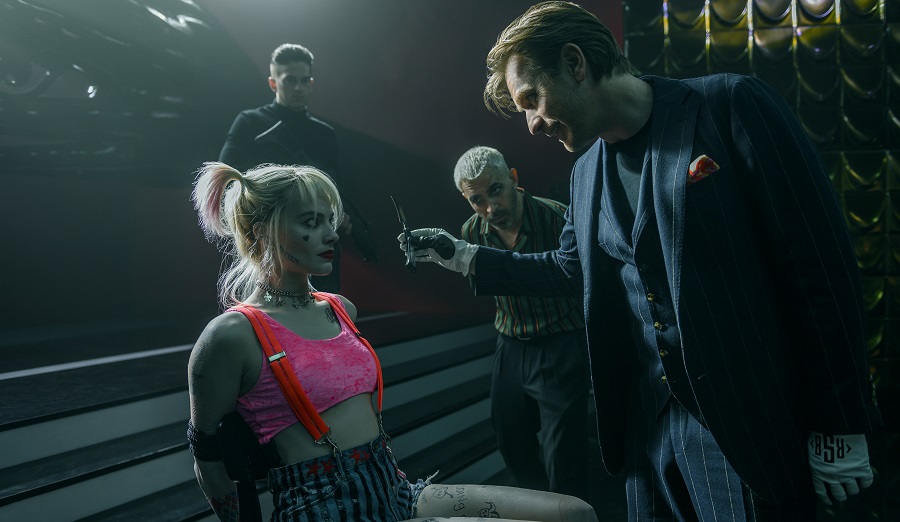
Margot Robbie as Harley Quinn, Chris Messina as Victor Zsasz, and Ewan McGregor as Roman Sionis/Black Mask.

Speaking of Harley, let’s talk about Margot Robbie, a tremendously talented actor whose numerous talents are rarely fully realized. Early career roles like Focus and Wolf of Wall Street can confine her to “hot;” later spots in Mary, Queen of Scots and Bombshell recognize her talent but not her infectious energy. Birds of Prey is possibly the first movie since her stunning work in I, Tonya to recognize just how fun she is to watch. Her Harley is magnetic, somehow pulling together wildly disparate threads into a character that’s not only coherent and plausible, but an absolute hoot to watch. Thankfully, the movie understands this, and is justly willing to sacrifice its own coherence on the altar of Harley Quinn Having A Good Time. Don’t mistake this for criticism. Every time Robbie is on screen, Birds of Prey is delightful.

The rest of the actors don’t all acquit themselves as well. Besides Robbie, Rosie Perez and Mary Elizabeth Winstead carve out some enjoyable niches as, respectively, a beleaguered police detective and a talented assassin who’s still working on her theatrics, but everybody is forced to split screen time with, by my count, six other main characters, and consequently, few are given enough breathing room to leave an impact. Ewan McGregor in particular chews the scenery like cud and with about the same productivity. But at the risk of sounding absolutely insufferable, it’s a comic book movie, where talented actors are often reduced de rigueur to rote line readings, and after I stopped trying to engage with it and let it wash over me, I was far less concerned with its quality. They’re getting their paychecks, and I can’t complain. 

All in all, I think I liked Birds of Prey, but give me a week and I suspect I’ll be hard-pressed to remember much about it. It’s about as popcorny as popcorn entertainment gets, a Technicolor rat king of (admittedly very cool) names like Victor Zsasz and Huntress jumping from locale to locale to commit some crimes that we may or may not be rooting for. Maybe not an enduring formula, but also not a bad way to spend the evening.

Categories
Reviews

Color Out of Space – Review

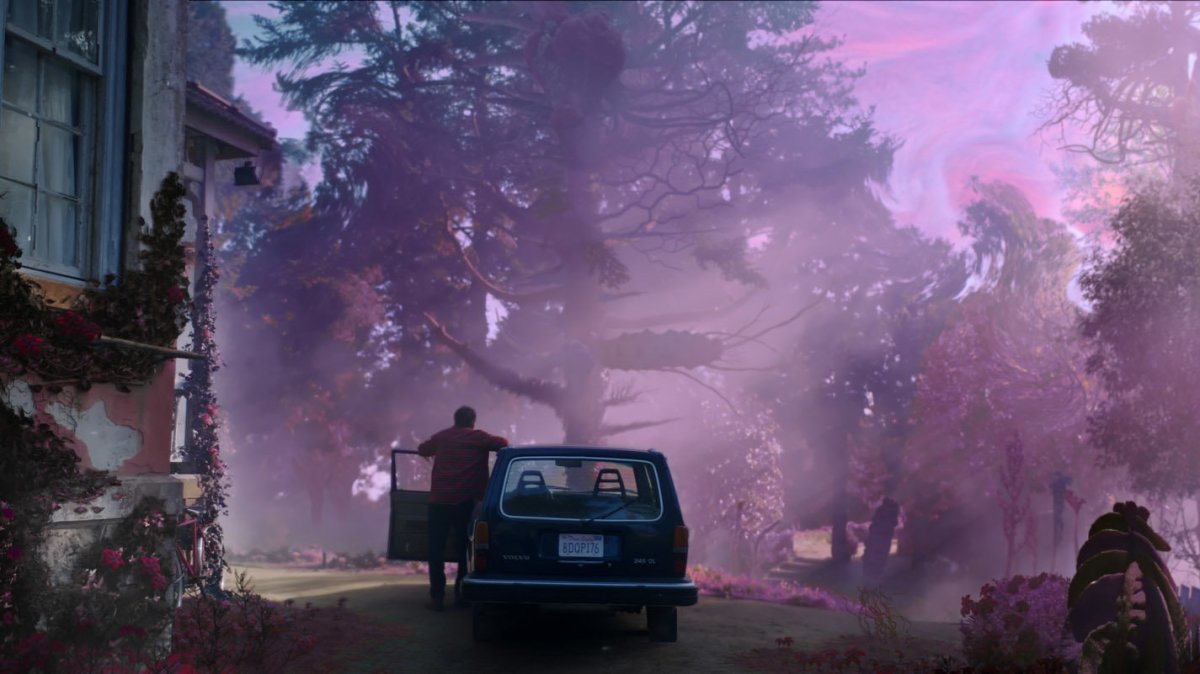
It’s understandable that Hollywood, as enamored with H.P. Lovecraft’s writings as it is incapable of imitating them, keeps plowing the fertile grounds of “The Colour out of Space,” one of his most upsetting, easily filmable, and least racist works. A majority of Lovecraft stories would require non-Euclidian sets; all you’d theoretically need for “Colour” is a versatile makeup department and some actors willing to commit. Sometimes you don’t really have either (1987’s The Curse) and sometimes you have both (2018’s excellent Annihilation). The latest take, a modernized adaptation from Richard Stanley, certainly has both, but much like the Color itself, it might start to disappear as soon as you look away. 

In the original narrative, first published in 1927, a meteorite crashes into a Massachusetts farm, dissipates into the soil, and over the course of several years, ruins the property and the family that owns it in decreasingly subtle and increasingly harrowing ways. It’s my favorite Lovecraft story, a pick I actually share with Lovecraft. “The Colour Out of Space” is a slow burn with an agonizing payoff, and despite its painfully human dramatis personae, few works in any medium articulate the idea of cosmic horror as well as the Color; even Cthulhu himself is arguably sentient, while the Color just is, and the Gardner family has the tremendous bad luck of being in the same zip code. This adaptation hews close to the original text, but like nearly all Lovecraft adaptations, it seems afraid to engage with its most compelling parts.

We’ll get to that in a minute, though. 

First things first: there’s a lot to like here. Credit goes to Stanley, who could have been cowed by his Dr. Moreau firing and subsequent absence from the triple-A level, but instead showed up to make something loud. Fittingly, the color palette is exquisite, and that’s more important than you might expect; as difficult as it must be to film something described in the source as imperceivable by sight, Kate Byron’s production and Sergio Costa’s art design impeccably build a world and push something foreign and wrong through the cracks. In almost any horror film, and especially with one as overwhelmingly visual as Color Out of Space, that’s half the battle. It’s aided by an excellent score from Colin Stetson, fast proving himself a master of compositions that feel like they should be less distressing than they are (seriously, have you seen the Uzumaki trailer? How does he do that?), and the cast, if not flawless, puts in solid work. 

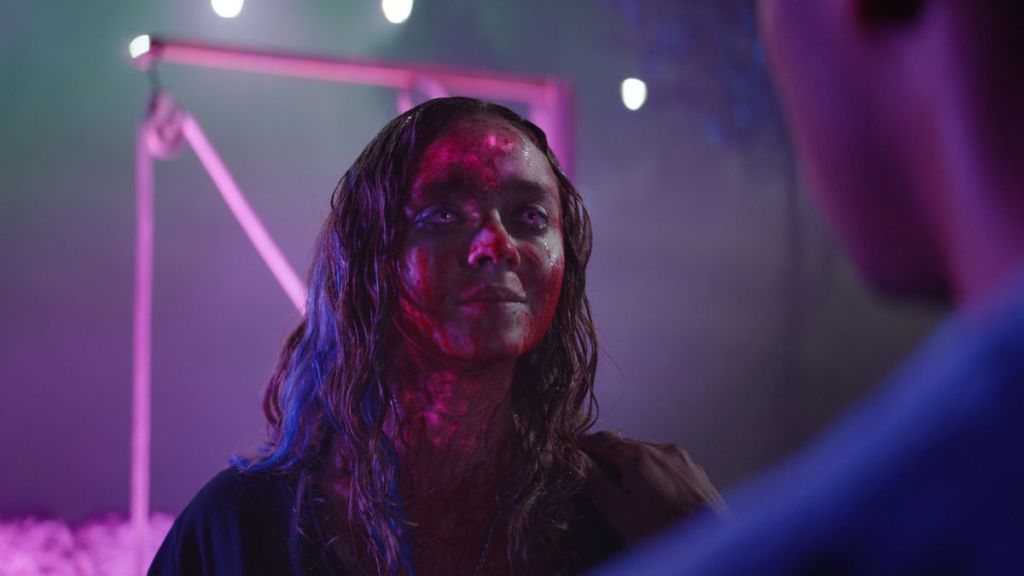
Madeleine Arthur as Lavinia Gardner.

It’s the script where things start to head south. Color is weighed down by sputtering expositional dialogue that openly refuses to trust the audience to read the context clues (e.g., and spoilers: the father, Nathan, blood on his face from putting down his diseased alpacas, tells his kids to leave the room with their infected mother. “What are you going to do?” they ask. “Handle it,” he responds. We’re given a few upsetting beats before the kids take the air out of the scene and ask “like you handled the alpacas?”). Perhaps this constant snapping to make sure we’re still paying attention is helpful, as the script is full of interesting but half-baked ideas, threads and themes that it doesn’t seem to know what to do with. Lavinia’s Wiccan predilections, Theresa’s mastectomy, Nathan’s tendency under duress to mirror his father, and Jack’s attunement with the Color are a few of many ideas that feel like they should have been used either more or less. This is, to some degree, the fault of the new time frame; where the original happens over the span of decades, Color takes place within a week. It works, but barely. Without the benefit of time to soften the edges, the plot races and the characters can feel abrupt; Nicolas Cage, in trademark Nicolas Cage fashion, leaves it all on the field, but never quite feels like he’s playing the same person from scene to scene.

This frantic nature leads me to my biggest gripe, a gripe I’d first like to acknowledge is wholly personal and based on my love for the original, rather than any kind of objective criticism: overall, out of necessity of time, Color leans towards the bombastic. Theresa’s madness is not protracted but gruesomely instantaneous. The crop decay literally happens overnight. It’s all handled effectively and with a clear ghoulish delight, and I’d heartily recommend it to anybody in search of some well-made pulp. But as a huge fan of the original short story, it’s hard not to be let down by a film that powers through any attempt at delicacy. “The Colour Out of Space” is such a crystalline example of creeping, inevitable horror, the kind that’s thankfully making a resurgence in Hollywood (Hereditary and It Follows are two of my favorites if you’re looking for a primer), and it’s markedly disappointing to see a film adaptation with a flawless source and such great potential reach into its bag of tricks and pull out the same old Necronomicon and a handful of bloody explosions. Not bad, mind you, just disappointing for a freak like me who bought a ticket hoping to see a family eroded through decades of impartial and inexorable suffering. It’s still a hoot, though, and as long as you’re not expecting “The Colour Out of Space,” you’ll have a grand time with Color Out of Space.

Categories
Reviews

Little Women – Review

How lucky we are to be alive at the same time as Greta Gerwig, who, only two feature films in, has established herself one of our best directors! I wondered how she’d possibly follow Lady Bird, her directorial debut, a knockout combination of sorrow, humor, and pathos. I shouldn’t have worried. Little Women is a stunning achievement, one of the finest movies I’ve ever seen in theaters, narratively expansive and yet sacrificing none of its intimacy or precision.


For those of you that didn’t do the assigned reading in middle school, Little Women is a novel written by Louisa May Alcott, centered on the March family, four sisters and their mother living in Massachusetts during the Civil War. It’s endured the century and a half since its publication, because it’s a great read that you should have done in the first place instead of watching TV, you dang kids, and also because it’s one of the first major English-language novels to seriously posit options for women’s careers besides marriage or madness. Every one of its major players is given a great deal of agency in the world around them, and the romance that is present is never one-sided; proposals of love, and any other event, are all treated as serious decisions made between complex human beings. I know even less about historical literature criticism than I do about movies, though, so suffice it to say if you haven’t read it, you should, and either way, you’ll love the 2019 film adaptation.


The whole package is lovely, but its boldest aspect is the script, an innovative, Jo-rooted, non-chronological rearrangement of major scenes from the novel. In any lesser circles this might have felt desperate or empty, but Gerwig’s guidance, in concert with Nick Houy’s assured editing, helps every scene lend new meaning to every other. The young girls squabbling on Christmas give us insight into the women they eventually become; the women reconvening on their old house let us long for what we’ve seen them leave behind. In one masterful sequence, Gerwig conjures an agonizing gap of time from two companion shots of Jo descending the stairs. It’s clever, but it never becomes preoccupied with its own cleverness, instead showing us the family in its totality. The script also features what potentially my favorite dialogue of any period piece; it employs archaic words and phrasing–many lines are direct quotes from Alcott’s original novel–but allows them deeply modern cadences, and the result is electrifying. Watch the Marches struggle to talk over each other about a neighbor’s party or discuss what to do with an old house, and they’re instantly recognizable as both characters from a past time and as a family you might overhear on the street. This alone would make Little Women a joy to watch; it is far from the only exemplary thing about it.

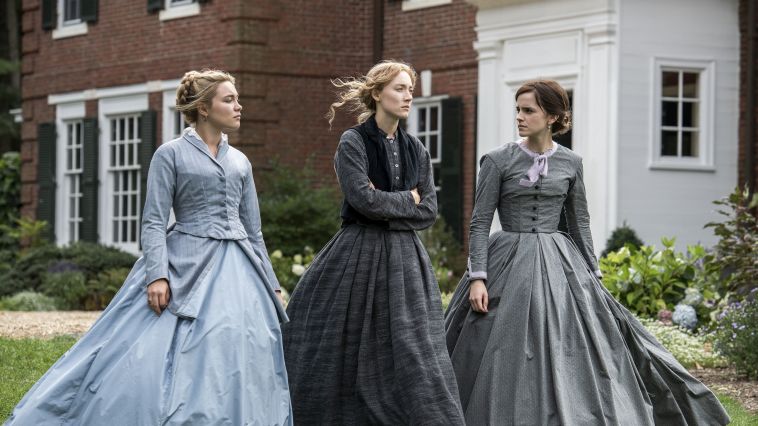
Florence Pugh as Amy, Saoirse Ronan as Jo, and Emma Watson as Meg.

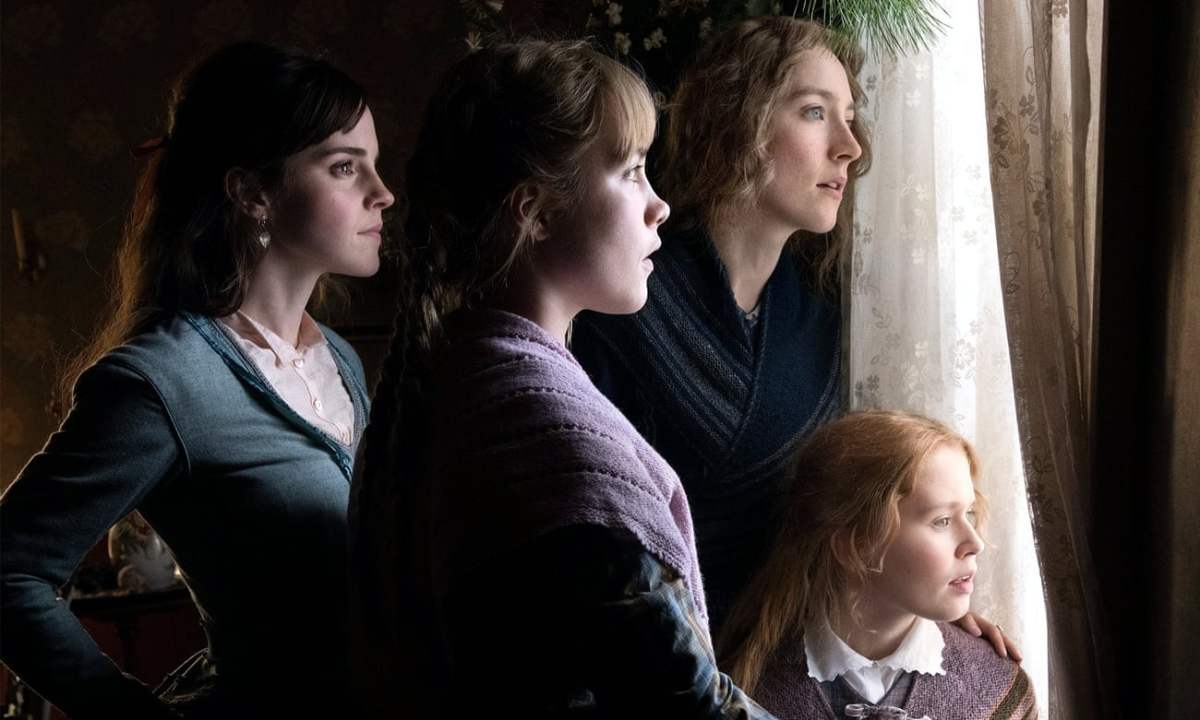
Adaptations of Little Women have long served as lightning rods for talented actors, as far back as Katharine Hepburn and Elizabeth Taylor, and the 2019 version is no different. Saoirse Ronan, as per usual, towers over the proceedings, her Jo March slipping from mood to mood but never losing her heart or her unstoppable drive–even when Jo is at her most abject and directionless, you can hear the gears spinning behind her eyes. When she tells a bedridden Beth that God’s will hasn’t met hers, you believe it. Florence Pugh deserves particular praise, too, for lending fan unfavorite Amy a tremendous amount of sympathy, painting her as a young woman less spiteful than she is acutely aware of herself and what it will take for her to advance herself. Even Timothée Chalamet, an actor I’m rarely completely sold on, is well-positioned as Laurie, a young man who has never wanted for anything and is completely unprepared when he does. Every actor, featured or not, lends a striking humanity–Laura Dern’s Marmee laughs through sentences to her daughters, Tracy Letts’ Dashwood has a habit of slamming down pages he’s done reading. Nobody falls into any easy period drama traps; nobody feels like an icon of a bygone era. They may be wearing frocks and waistcoats, but throughout the near-decade sprawl of the story these characters remain immediate and achingly human.


It’s impossible to catalog the full range of excellence on display here, but I’m going to list a few standouts. Yorick Le Saux’s elegant cinematography knows exactly where to place the camera, letting us trace every ill-concealed thought that flickers across Jo’s face, zooming out to let her face down the Massachusetts countryside alone. Alexandre Desplat’s score is pitch-perfect, planting us squarely in the post-war North without feeling antiquated. And most notably, Little Women‘s feminist sensibilities are simultaneously barely spoken and ever-present. The movie is not, textually speaking, about women’s rights, any more than it is about the Civil War, Massachusetts, or painting. There are few lines that read explicitly as rallying cries, and even then, their purpose is generally narrative. Yet we are never let off the hook, never allowed to forget the full scope of the March family’s situation. You can practically feel everything Marmee chokes down as she says “I am angry nearly every day of my life.” Little Women doesn’t want us to forget she’s got every reason to be. (The movie arguably does Alcott’s original ending justice as well, with a brilliant ending device that I won’t spoil here, but allows both Jo and Gerwig to have their cake and eat it too.)


As good as it is, Little Women barely misses perfection. Emma Watson’s valiant efforts do little to lift Meg from her fate as the least interesting March sister, and a handful of moments from the flashback scenes, despite the makeup department’s stellar use of bangs, can still feel like older actors stooping to play younger. These spots are few and far in between, though, and not dealbreakers even when they present themselves; they do little to diminish the breathtaking quality of the film. Much like Lady Bird, every inch of this piece is suffused with emotion in a way that’s easy to miss until it knocks you flat. Little Women is sweeping and accessible, grounded and skybound, and above all an absolute delight to watch. Movies don’t often come this exquisite. 

Categories
Reviews

Star Wars: The Rise of Skywalker – Review

I’ve never really gotten Star Wars. 

I’ve watched every main series movie and some of the various shows, but the property’s never gelled with me the way that it’s seemed to for so many of my contemporaries. This, obviously, isn’t a value judgement, but I do think it’s worth noting, because I’m not approaching this as a fan. I’m not here read up or, frankly, particularly interested in the lore; I don’t care if my favorite character shows up and says a cool line or not; I’m here to watch a movie, the final in a trilogy, and on that particular baseline, I found myself surprisingly and immensely let down by The Rise of Skywalker

Like I said, Star Wars was never really my thing, I suspect in part thanks to its obsessive backstorying. The stormtrooper that Luke stole the armor from? His name is TK-422, and he’s in multiple comic books. The droid that malfunctions just before the Skywalker family purchases it? That’s R5-D4, obviously, a secret rebel agent who self-destructed on purpose to keep R2-D2 and C3PO together. The extra that appears in one shot, running through Bespin with what’s clearly a hastily painted ice cream maker the prop department handed out? You idiot, that’s Willrow Hood, who just three years ago had to flee a hijiacked Star Destroyer in fear of an overloaded reactor, and his ice cream maker is actually a secure storage device you’ll see in multiple episodes of The Mandalorian

Again, none of this is bad, per se—but it does assume, in any willing participant in Star Wars media, the desire to seek out this kind of extraneous information, to enhance our understanding of a piece of narrative we assumed was whole and self-contained. I’m not here to badmouth that urge; it’s clearly worked for millions of people, but personally, I find this exhausting. I’ve little interest in appendices and auxiliaries, which is partially why I, not really a fan, was absolutely enchanted with The Last Jedi, a breath of fresh air in a crowded genre universe. 

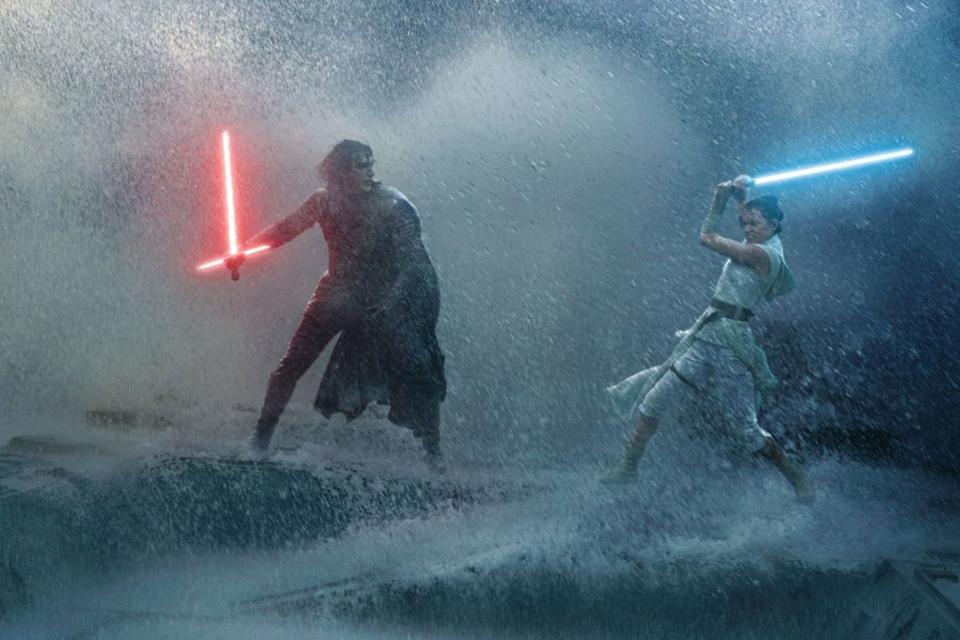
With this obsessive chronicling, the Star Wars universe places an immense importance on the power of inheritance and bloodline, whether figuratively (the now-titular Skywalker dynasty) or literally (the somehow still-canonical midichlorians). But I loved TLJ’s disavowal of nostalgia, its open refusal to define itself by what came before. Its characters were troubled, difficult people who had flaws, and more importantly, whose flaws couldn’t be explained or whose power couldn’t be foreshadowed by their parents. Daisy Ridley’s compelling and vulnerable Rey is not interesting because of her dad; she is interesting because of who she is, and TLJ takes away any easy answers and makes her find her place in the universe on her own. It sees its characters as capable of making mistakes—not miscalculations, not accidents, but genuine mistakes—and this, consequently, allows these characters to grow and the world they inhabit to expand, without relying on any visual dictionaries or spinoff TV shows. Poe’s refusal to follow the orders of a commanding officer that clearly knows more than he does result in blood of his fellow soldiers on his hands, and this lets him—and us—realize the cost of war. Finn wants to be a Resistance hero, but his cowardice and uncertainty mean that he has to learn what that means through the efforts of a character clearly better suited for the job. And most strikingly, the Jedi Master Luke Skywalker himself is not the hero that Rey and the audience want him to be, he’s the last of a dying order who’s cracking under the weight of the world around him. No character is perfect, and this lends their failures weight and their successes approaching something like majesty. 

In contrast, these same characters in TRoS are incapable of making any wrong choices, and it drains the narrative of uncertainty or impact. Finn orders a bizarre tactic because he has an “instinct,” and it’s completely correct and wins the battle. Poe escapes the First Order by using a flight path we’re told is dangerous, but absolutely nothing goes wrong and they arrive safely at base. And in one of the movie’s most frustrating moments, as if taunting a better plot, after Rey’s anger and fear lead her to unleash a power that kills Chewbacca, it’s revealed to be a fakeout in under five minutes. Nobody gets hurt, nobody learns anything, and we never doubt that our heroes will do exactly what they say they will. The complete lack of tension would be frustrating in any movie, but it’s especially challenging in one that wants us to accept Rey’s alleged moral uncertainty is a major plot point. Will Rey fall to the dark side? No, obviously, she won’t, because in TRoS she never does anything to indicate that she’s even remotely susceptible. Sure, she has visions of herself taking Palpatine’s place, but she says that she won’t, and we’re (correctly) given no reason to doubt her. If TRoS truly wanted to expand on this plot thread, it would have done well to pick up from where TLJ left off, the memorable throne room fight scene, but this, like every good idea TLJ had, is retconned, apologized for, or straight-up ignored. Luke catches the lightsaber, Kylo’s mask is reforged—what was the point of making a sequel if the first hour of the next movie would be spent saying “just kidding?”

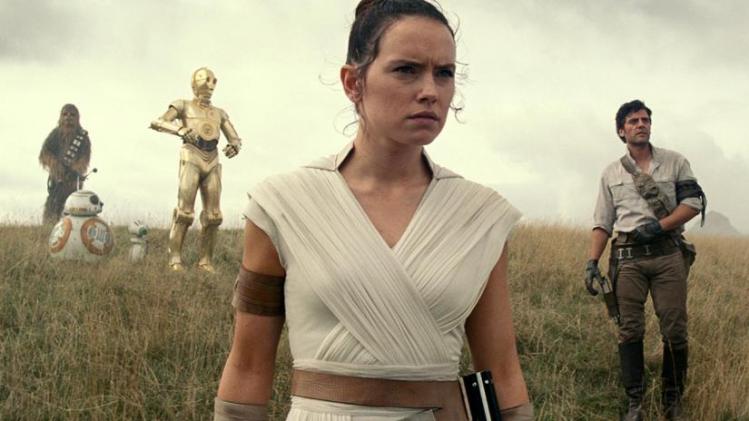
Left to right: Joonas Suatomo as Chewbacca, BB-8 and D-0 as themselves, Anthony Daniels as C-3PO, Daisy Ridley as Rey, and Oscar Isaac as Poe Dameron.

In Abrams’ defense, he can’t have had an easy go plotting this movie—he’s a talented craftsman, but originality has never been his strongest suit.  Bafflingly, despite having more money than we’ll ever understand and command of one of the most popular media franchises of all time, Disney didn’t have a post-it wall or something detailing the plot arc of its massive reboot, and Abrams was forced to follow a controversial film from a director known for trope-breaking with one of his principal players, the late great Carrie Fisher, gone from the picture. 

In Abrams’ attack, however, he and screenwriter Chris Terrio have created a final film in a trilogy that point-blank refuses to “yes, and” any of the movies before it, creating a bizarre sense of both over-familiarity and discontinuity.  In a move that not only has no precedent in the earlier movies but completely devalues Vader’s sacrifice at Return of the Jedi, Palpatine has somehow returned from the dead (a plot element hand-waved away with “the dark side of the Force” and an impressive piece of set-dressing), but we don’t even get to see this critical inciting event because it happened, of all places, in Fortnite. This sets the tone for a movie that feels like it was written round-robin: Rey shouts “never doubt a droid” literal seconds after we watched her doubt a droid. First Order ships explode over Endor and Jakku, somehow, and we’re never shown why. Kylo kills some people at the beginning, I guess, presumably because they needed a combat shot for the trailer. Consequently, the end to this series forty years in the making feels weightless, because it turns down the force of any prior films and relies on its own dribbling impact. 

This is doubly frustrating because across this new trilogy, the central cast has uniformly held their own. Ridley, Boyega, Isaac, and Driver are gifted actors that, despite being ping-ponged from director to director, have still given their choices power and meaning, a challenge that they meet with aplomb, but still means nothing alongside the script’s total lack of drive. 

Some questions, in no particular order:

-What purpose does Zorii serve, if not Disney feebly hanging a massive “no homo” sign over Poe? I’m aware she gives him some macguffin or other, but he could have tripped over it with exactly the same plot consequence, so why waste my time, and more importantly, Keri Russell’s time?

-What in the world is a force dyad? Did I hear that correctly, and is it as inane as it sounds, and did we really need a whole new concept to explain why Palpatine is draining them both? Couldn’t we have just assumed it was because they’re both powerful Force users?

-Why does Finn not tell Rey whatever he was going to, and why did Abrams wait until after the movie to say it was “I’m force-sensitive?” Was he just leaving an open slot in the script to cover himself in case of poor reception emergency? 

-Why in God’s name do Rey and Kylo kiss? What possible point does that serve? Who thought any of their interactions in any movie, including this one, indicated romantic or sexual feelings for each other, and has that person ever had romance and/or sex?

-Why does Dominic Monaghan have a role that transparently was once Kelly Marie Tran’s? What cruelty prompted the team to make her stand directly next to him in every shot and watch as he says her lines?

I don’t mean to harp, much as I love harping. I can understand a part of the negative response to TLJ, and I understand why this movie was intended as a course correction. I walked in knowing I wouldn’t love it. But I expected a certain degree of technical competence, of plot logic, of whizz-bang-pow, and every part of this is all but absent. The Rise of Skywalker has been smoothed to avoid criticism, but in this smoothing, every possible edge has been filed off, and it leaves us with almost three hours sanded down to nothing. 

Categories
Reviews

CATS – Review

First, a disclaimer: CATS is rough.

I do not open with this fact as a revelation; we all know it’s rough, and you didn’t open a review of CATS expecting to hear anything else. I’m telling you CATS is rough up top because I’m about to say some very charitable things about CATS, and I don’t want them to be mistaken for endorsement. Make no mistake, CATS is, with all due love and respect, an absolute mess, a lurching, neurotic beast that stubbornly refuses to become fun, cute, accessible, or entertaining. 

But! Stay with me here.

I knew I’d be approaching this with a more generous mien than most reviewers; many complaints seem to be lodged by people who’ve never seen a musical. A lot, if not most, of general confusion and revulsion might confuse, but likely not appall any audience that’s been to the theatre in the last month. The unnerving movements of the actors? The plot absentia? The creeping unsurety that any given cat may be about to have sex with any given cat? That’s just CATS, baby! It’s not my bag, but the musical’s got enough prestige that it’s clearly at least some people’s bags, and as an actor myself, it feels untoward to mark these points down against it. Kudos to the rest of the world for noticing that those theatre folk can be awful uncomfortable to be around, but we’ve known that for centuries now—so yes, it’s never made certain, but I can’t consider “what even are Jellicles, even??” a legitimate avenue of criticism of CATS, especially when there are so, so many more interesting avenues of criticism worth taking. (Not to mention, you ungrateful jerks, there’s a song right up front listing multiple defining characteristics of Jellicles!) 

In fact, CATS, at times, feels oddly beholden to its stage roots, not in its sets or in the bizarrely exemplary Sir Ian McKellan’s Gus the Theatre Cat, but in its intoxicating community theatre energy. The cast is stuffed with actors, dancers, and performers of varying levels of fame and talent, but they all seem earnestly and uniformly convinced of the work’s quality, barely able to contain their pride at their monumental performance, and if you just breathe in this energy, it’ll–well, not sweep you away, exactly, but certainly pass your evening, watching Jason Derulo in a genuinely impressive percentage of the film beyond the number where he yells “MILK!” Every actor, dancer, singer, or just…kinda…famous person is really, really, really trying here, and while there are more misses than hits, it can slip through the cracks and entertain you if you let it. Nothing is phoned in or half-assed; Academy Award winner Jennifer Hudson would be well within her rights to roll her eyes through “Memory” and her terrible makeup, but she absolutely doesn’t, and it saves about as much as can be saved. Even much (justly) maligned Rebel Wilson doesn’t shy away from the bonkers scene she’s given, and it results in, sans the cringing one-liners, one of my favorite scenes in the movie. 

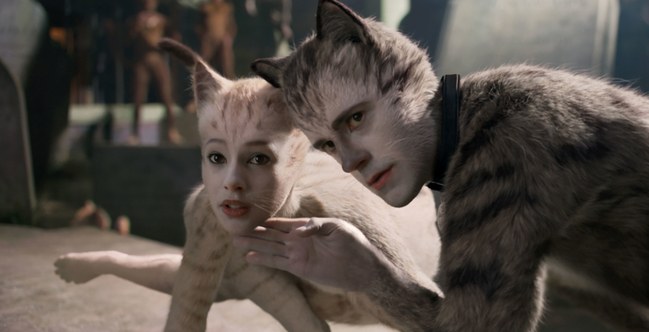
Francesca Hayward as Victoria and Robbie Fairchild as Munkustrap.

I’m going to say more good things about CATS in a minute, but just so I can get them out of my system first, let me rattle off some of its more noxious failings. 

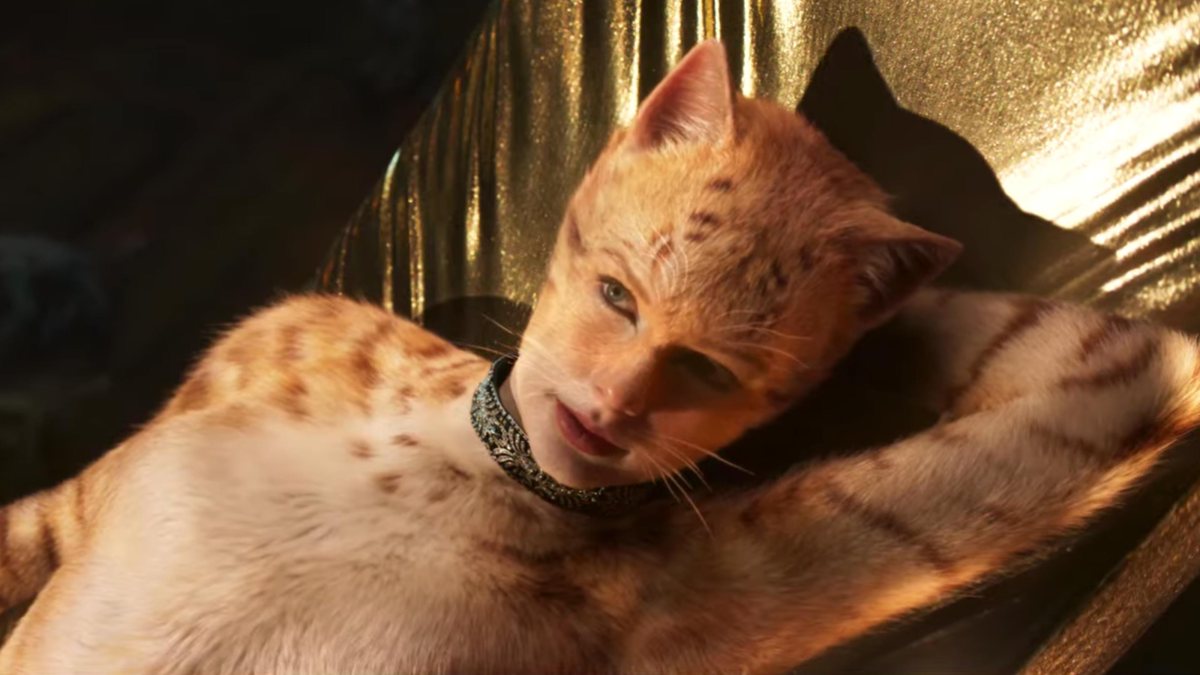
Director Tom Hooper, he of the undercooked and overwrought Les Mis, has turned his baleful gaze upon another musical, with some similarly useless results–his close-up camera is a repellant match with the CGI cat disguises. Worse, and damningly, CATS is a musical dominated by dance and movement, and Hooper has no idea how to film either, forcing us to watch world-class dancers through a shaky-cam behind a trash can, hiding underneath a table, or on one particularly taunting occasion, a snap zoom out across the Thames. To be fair to Hooper, this might be intended as somewhat of a mercy; if you’ve seen any promotional photos or the trailer and thought “that must get easier to look at,” you’re an optimist. The cats are, in a word, horrid, and never become less horrid as the movie goes on. The eldritch fur, the way the actors’ faces are stapled on to their bodies, the incomplete CGI that will intermittently cause parts living and otherwise to phase through each other–every part of the the visual design is both poorly conceived and executed. The movie understands this on some level and cloaks many of its larger players in some kind of costume, but this only makes the reveal all the more upsetting: just as you think Cat Idris Elba is acquitting himself reasonably well in this horrorshow, he’s shown without his coat and somehow Cat Idris looks more naked than a regular naked Idris might.

But let me pose you a question: what was the last AAA, big-budget movie you saw that approached this level of catastrophic unpleasantness? Not in a sleazy or lazy way–we get a J-horror remake or family animated based on an old board game once a month–but a manner this genuinely mystifying? What was the last movie you saw with this kind of pedigree, this kind of talent and money and cultural recognition and history, and yet still feels like you’ve lost your place in a Catholic mass? What was the last movie you saw at your local Regal or AMC that sat you down, powered through your japes and jeers, and made you ask, out loud, to your friends sitting next to you and the folks behind you, now bonded in your common experience: “what the hell was that?”

For this, I think I loved CATS. Don’t get it twisted, I assuredly didn’t like it, and would think twice a half-dozen times before recommending it to anybody without (to borrow a phrase from another sadomasochistic film) unconventional desires. But in today’s film market, there’s something almost refreshing about the hideousness of CATS, a movie made by hundreds of talented and experienced professionals that still somehow looks like this,and for that, it has my admiration, if not my respect. Towards the end of my screening, somewhere around the fourth or fifth time a heavily costumed Dame Judi Dench turns to camera, she intones with solemnity and a twinkle of joy, “a cat is not a dog,” and I heard someone a few rows back sincerely say, “fuck, it sure isn’t!” And that, perhaps, is a perfect microcosm of CATS. Will you find it great, enduring cinema? Probably not, but it’s your own fault for coming here in search of it. You want good art, go see Parasite or Little Women. You want to spend an unfathomably long hour and a half learning some names of some cats, and what their whole deal is? CATS has you covered, and if you meet it on those terms, you just might enjoy it. 

Design a site like this with WordPress.com
Get started