“If you’re here, then you already know who she is.” In the first scene of Tár, New Yorker writer Adam Gopnik (playing himself) begins an interview with Lydia Tár, listing her many, many accolades to the crowd–she’s one of the rare recipients of an EGOT, a personal favorite student of Leonard Bernstein, a internationally renowned conductor and one of the only women to ever hold prestigious residencies from Boston to her current Berlin. From the back of the house, a woman watches. We only see the back of her head. We won’t know who she is or what she’ll do until far into the movie, when it’s too late. But the interviewer is right; she does know who Lydia Tár is. It’s a queasily effective setup for an expansive, meditative, and in a word, magnificent film, that throughout its nearly three-hour runtime, puts us in the same seat as this anonymous woman: we, too, learn who Lydia Tár is. And we, too, can’t help but watch.
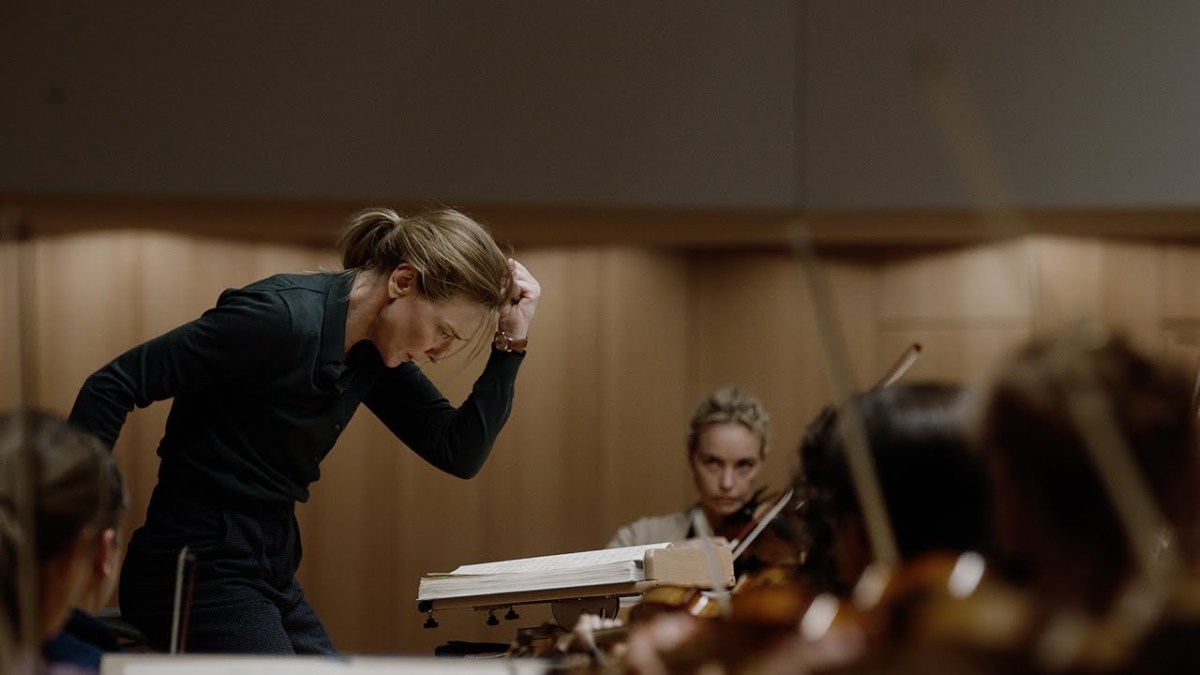
Tár, an astounding Cate Blanchett, clearly has more going on than her prodigious talent. She’s earned all her laurels, she’s an eloquent speaker and a polyglot, she’s established her own scholarship foundation to further the careers of other female conductors–she’s also, as we see in the very first shot, off-balance, twitchy, as if there’s a mosquito circling her neck. Her silence and care is matched by the general lack of underscoring throughout, and it makes the noise of a car, a bug, a person feel like an intrusion on her hermetically sealed life. We see her stopped dead in her tracks by the faint sound of a doorbell, hush the sputtering of a match lighting a candle, and a harrowing sequence featuring her as a guest teacher at Julliard perfectly encapsulates her as unremittingly brilliant, lightning-quick, and an inveterate asshole. It’s an arresting introduction, made better still by Blanchett, who’s doing some of the best work of her career, showcasing a woman at the height of her powers, capable of breathtaking works of art–some scenes of her conducting Mahler are shot almost like a documentary, letting the music and the actor speak for themselves–and stunning depths of cruelty. Early on, Tár takes her wife’s daughter to school, sends her off, and then approaches the daughter’s bully like a wolf walking towards a fawn. I won’t spoil what she does, but what a showcase of her dominance, in more ways than one.
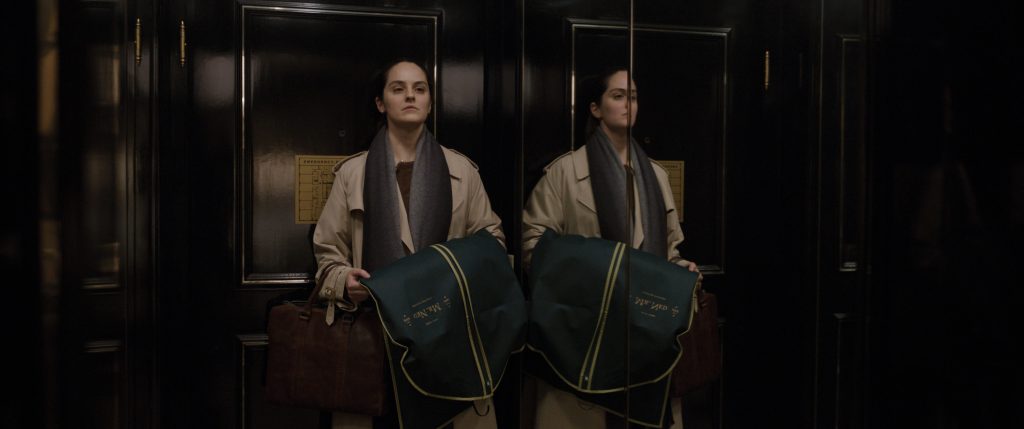
Throughout the film, Tár’s drive to control is played against the very nature and composition of the movie itself. In that interview with Gopnik, she talks, with a chilling, magnetic clarity, about time. She doesn’t discover anything in performance, she says; she’s not responding to the orchestra, or trying something new, or letting the music carry her. No: “the reality is that right from the very beginning I know precisely what time it is, and the exact moment that you and I will arrive at our destination together.” But the world around her, both in a narrative sense and in the construction of the film, will not allow her this jurisdiction, plaguing her with old demons coming back to roost. Director Todd Field fills her home, the brutalist concrete of Berlin, with tiny instances, dreamlike sequences and sometimes just dream sequences, that she cannot control. They don’t always have a direct plot relevance, and I suspect they may bore some audiences expecting a tight drama (two people did walk out of my screening) but as a sort of tone poem, it’s unparalleled. The bed on fire, the lovers through water, a single black dog–it’s not all directly clear, nor should it be, nor does it need to be. Tár runs for exercise, and at one point in a public park, hears screaming. She tries to find its source, and cannot. Next scene.
I haven’t stopped thinking about this movie since I saw it, and though there’s so much more I’d like to note and praise, from the perfectly executed set work to the quietly ruinous performances to the single most devastating use of Monster Hunter cosplay ever recorded, the best thing to do might just be to cut myself off early. The movie has too much to say, and I’d be doing it a disservice to speak for it. For example, on a thematic level, Tár touches on ideas of cancel culture and sexual and gender identites, but it’s never crass enough to address these things by name; it doesn’t want to be broad cultural pedagogy, but a dissection of a self-made woman picking at her own seams. Here’s what this is, it says; draw your own conclusions. The rest of the movie follows suit. Sure, it’s about ten million things, and I can’t wait to read (and maybe write) those essays, but for a review, I think it’s good enough to say they’re there, and they’re fascinating. Tár is, like its protagonist, complex, captivating, and not easily defined. Except to say that it’s phenomenal, my favorite movie of the year so far.




 Movies That Are Worse Than “Mad Max: Fury Road” (2015)