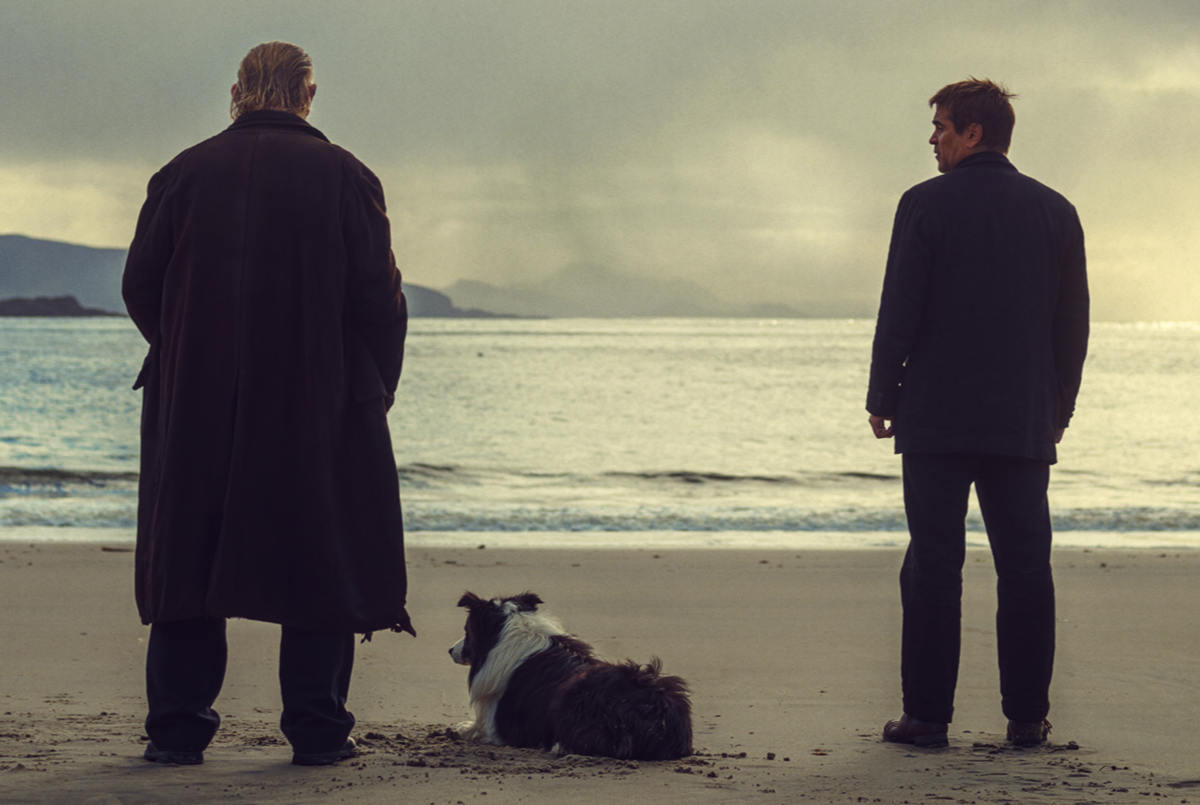
About a quarter of the way into The Banshees of Inisherin, Colin Farrell’s Pádraic bemoans his sudden loneliness. He’s sweet but simple, with a kind of hangdog sincerity Farrell plays to the hilt, and his best (and really singular) friend, an older fiddler Colm (Brendan Gleeson), has just told Pádraic he doesn’t like him anymore. Pádraic is explaining this to the only other person that’ll really tolerate his company, a manic, horny child, who takes this information in and mulls on it, head in hands. “I think he’s depressed,” Pádraic whispers. The kid responds “why doesn’t he just push it down like the rest of us?” This is a perfectly emblematic cross-section of the larger film, a story about loneliness, darkly and hilariously told, with an unusual (for writer/director Martin McDonagh, that is) amount of restraint. Long-time fans of his work may find themselves wishing for a little more action, but as one of those aforementioned fans, I found myself quite enchanted by Banshees.
The title comes from a song Colm’s writing, a four-piece composition inspired by the imagined banshees of the tiny coastal island that the movie never leaves. Banshees are portents of death, and if you’re at all familiar with McDonagh’s earlier work–movies like In Bruges and Seven Psychopaths, and a decorated playwriting career including The Pillowman and The Lieutenant of Inishmore–you’re going into this movie expecting a fair amount of death anyways. But while Banshees is pocked with violence, swift, painful spurts that dot daily life on the titular island, it’s hardly the bloodbath you’d reasonably expect; rather, violence constantly haunts the peripheries. Banshees is set in 1923, next door to the Irish Civil War, and we regularly see plumes of smoke in the distance, hear the crack of gunfire echo across the channel from the mainland. Inisherin is a fictional island, and the war might never reach its shores, but it never, never leaves the world, a choice that–along with McDonagh’s own reputation–fills the movie with a grimly comedic dread. It’s tightly wound, and when things happen (and don’t get it twisted, this is the man that made Three Billboards, things happen), there’s a notable remove, almost like we’re being hurried along past the point of impact. There’s some excellent staging and visual work in this pursuit, too, as cinematographer Ben Davis keeps the camera just on the other side of the window, wide on the countryside, or sometimes literally in the clouds, not letting us get too cozy with the humans below. Around here, Banshees seems to argue, a place where men will mutilate themselves before speaking an honest thought clearly, violence is inescapable. Don’t look too hard, it says, just keep your eyes forward, there’s more behind and there’s more ahead too.
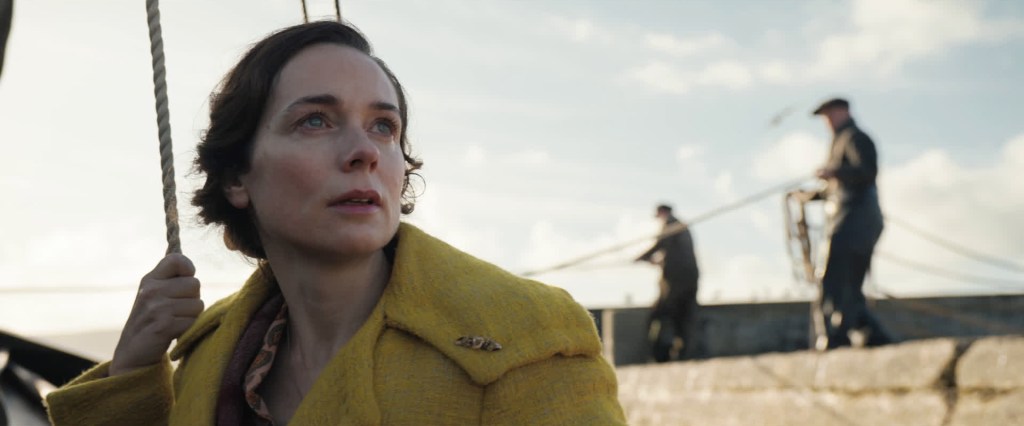
The only character that seems to have a means and will to escape Inisherin’s vicious cycle is Pádraic’s sister, Siobhan, played by the superb Kerry Condon. Even among the uniformly excellent lead cast–Farrell, Gleeson, and a delightfully unhinged Barry Keoghan as the aforementioned horny child–Condon deserves special praise for her magnetic prism of anger, sorrow, repression, and determination that never once feels broad or easy. She’s an intelligent but ill-liked woman on the outside of these outsiders, the beating heart of the movie, and when she leaves its world much of its brightness does too. The things the men left behind do get harder to watch, less funny and more nerve-wracking, until at some point Banshees just kind of stops. There’s not a single dramatic event, reunion or otherwise, that the story hinges on; rather, it reaches the end of its thought, and then roll credits. I thought it compelling and effective, but would understand a certain frustration with this, especially in a movie this neatly made.
All in all, I quite liked Banshees. There’s a deliberate understatement about it, atypical for McDonagh films, atypical for stories about masculinity, atypical for comedies, atypical for movies starring Colin Farrell, poor man, and all of that works in its favor. You watch it, and you know, you just know what it could burst out into at any second–but it doesn’t. And if that doesn’t frustrate you, and I hope it doesn’t, then it’ll captivate you.
 Movies That Are Worse Than “Mad Max: Fury Road” (2015)