Categories
Reviews

Tár – Review

“If you’re here, then you already know who she is.” In the first scene of Tár, New Yorker writer Adam Gopnik (playing himself) begins an interview with Lydia Tár, listing her many, many accolades to the crowd–she’s one of the rare recipients of an EGOT, a personal favorite student of Leonard Bernstein, a internationally renowned conductor and one of the only women to ever hold prestigious residencies from Boston to her current Berlin. From the back of the house, a woman watches. We only see the back of her head. We won’t know who she is or what she’ll do until far into the movie, when it’s too late. But the interviewer is right; she does know who Lydia Tár is. It’s a queasily effective setup for an expansive, meditative, and in a word, magnificent film, that throughout its nearly three-hour runtime, puts us in the same seat as this anonymous woman: we, too, learn who Lydia Tár is. And we, too, can’t help but watch. 

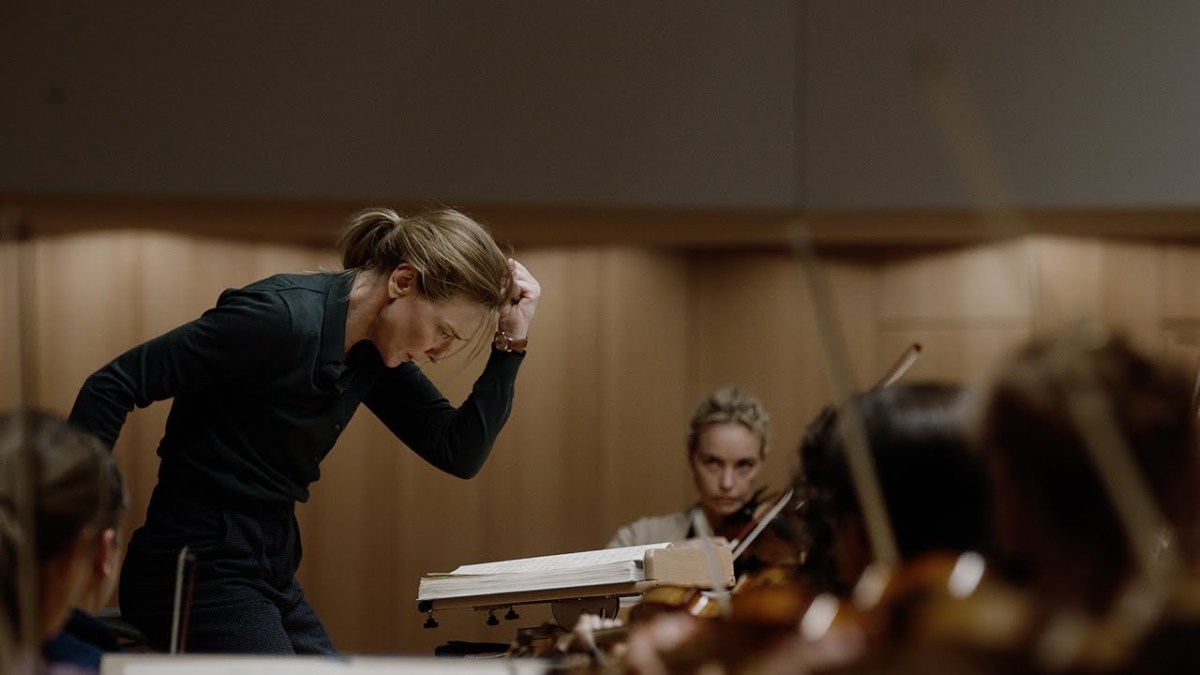
Tár, an astounding Cate Blanchett, clearly has more going on than her prodigious talent. She’s earned all her laurels, she’s an eloquent speaker and a polyglot, she’s established her own scholarship foundation to further the careers of other female conductors–she’s also, as we see in the very first shot, off-balance, twitchy, as if there’s a mosquito circling her neck. Her silence and care is matched by the general lack of underscoring throughout, and it makes the noise of a car, a bug, a person feel like an intrusion on her hermetically sealed life. We see her stopped dead in her tracks by the faint sound of a doorbell, hush the sputtering of a match lighting a candle, and a harrowing sequence featuring her as a guest teacher at Julliard perfectly encapsulates her as unremittingly brilliant, lightning-quick, and an inveterate asshole. It’s an arresting introduction, made better still by Blanchett, who’s doing some of the best work of her career, showcasing a woman at the height of her powers, capable of breathtaking works of art–some scenes of her conducting Mahler are shot almost like a documentary, letting the music and the actor speak for themselves–and stunning depths of cruelty. Early on, Tár takes her wife’s daughter to school, sends her off, and then approaches the daughter’s bully like a wolf walking towards a fawn. I won’t spoil what she does, but what a showcase of her dominance, in more ways than one. 
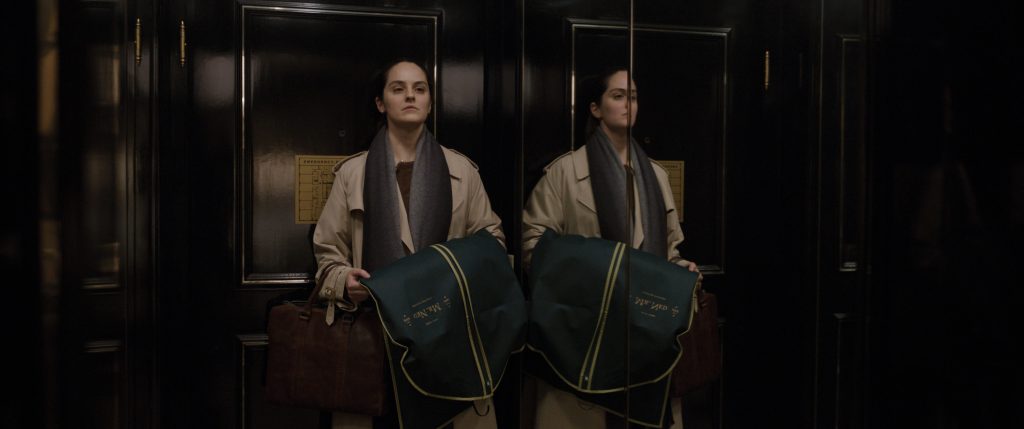
Noémie Merlant as Francesca.

Throughout the film, Tár’s drive to control is played against the very nature and composition of the movie itself. In that interview with Gopnik, she talks, with a chilling, magnetic clarity, about time. She doesn’t discover anything in performance, she says; she’s not responding to the orchestra, or trying something new, or letting the music carry her. No: “the reality is that right from the very beginning I know precisely what time it is, and the exact moment that you and I will arrive at our destination together.” But the world around her, both in a narrative sense and in the construction of the film, will not allow her this jurisdiction, plaguing her with old demons coming back to roost. Director Todd Field fills her home, the brutalist concrete of Berlin, with tiny instances, dreamlike sequences and sometimes just dream sequences, that she cannot control. They don’t always have a direct plot relevance, and I suspect they may bore some audiences expecting a tight drama (two people did walk out of my screening) but as a sort of tone poem, it’s unparalleled. The bed on fire, the lovers through water, a single black dog–it’s not all directly clear, nor should it be, nor does it need to be. Tár runs for exercise, and at one point in a public park, hears screaming. She tries to find its source, and cannot. Next scene. 

I haven’t stopped thinking about this movie since I saw it, and though there’s so much more I’d like to note and praise, from the perfectly executed set work to the quietly ruinous performances to the single most devastating use of Monster Hunter cosplay ever recorded, the best thing to do might just be to cut myself off early. The movie has too much to say, and I’d be doing it a disservice to speak for it. For example, on a thematic level, Tár touches on ideas of cancel culture and sexual and gender identites, but it’s never crass enough to address these things by name; it doesn’t want to be broad cultural pedagogy, but a dissection of a self-made woman picking at her own seams. Here’s what this is, it says; draw your own conclusions. The rest of the movie follows suit. Sure, it’s about ten million things, and I can’t wait to read (and maybe write) those essays, but for a review, I think it’s good enough to say they’re there, and they’re fascinating. Tár is, like its protagonist, complex, captivating, and not easily defined. Except to say that it’s phenomenal, my favorite movie of the year so far. 
Categories
Reviews

Halloween Ends – Review

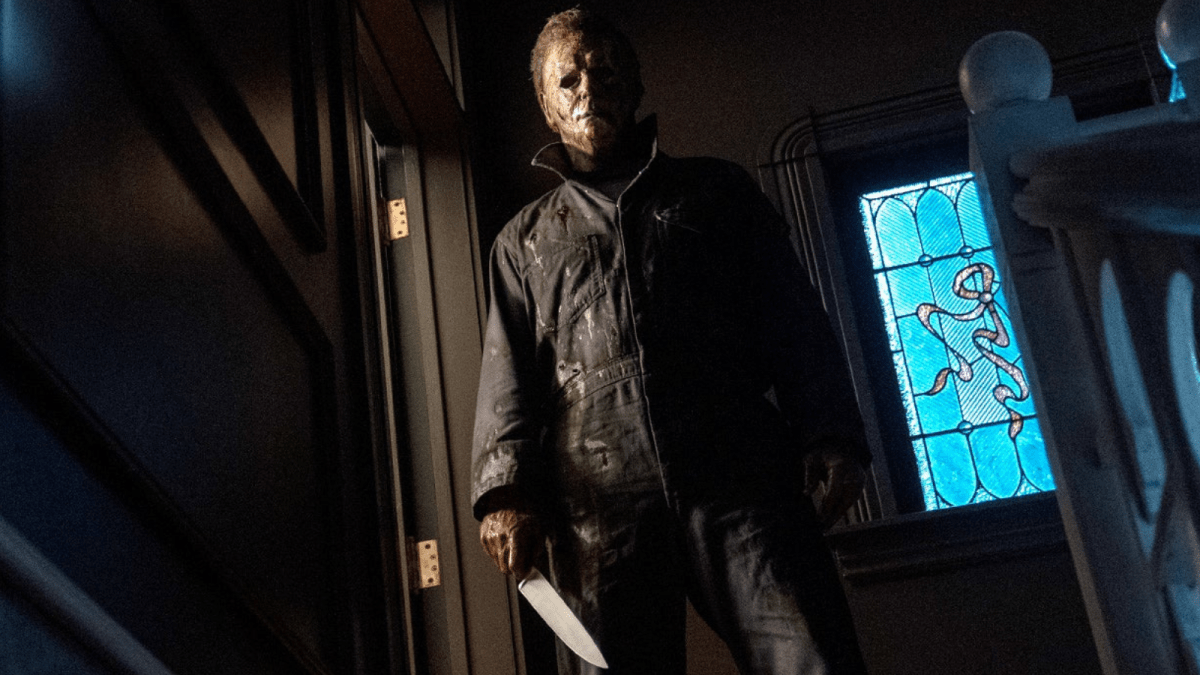
If you’re not up on your lore and are confused by the litany of sequels, spin-offs, and reimaginings, Halloween Ends is the conclusion to the most recent sequel/spinoff/reimagining trilogy, and allegedly, the end of the series as a whole (but come on, guys, we know you’ll exhume that corpse the second you think you could make more money off it). This trilogy has the distinct advantage of being entirely helmed by the same person throughout, David Gordon Green, a talented director with a solid resume. Unfortunately for him, and for us, he’s had to make Halloween movies, something he seems to resent. Here, he wants to tell serious stories and guide meditations on violence, but if that violence takes the form of the actual Michael Myers, it’s hard to follow his train of thought. It’s the thing that, in my opinion, somewhat undermines the entire affair. In the 2018 Halloween, it’s hard to dismiss Laurie Strode as addled and broken because it’s, you know, Michael Myers. In Halloween Kills, you can’t take any cautionary statements about mob justice seriously if the mob is organized against, you know, Michael Myers. And in Ends, when Laurie starts pontificating about the nature of evil, in another movie you’d absolutely agree with the other characters, who uniformly dismiss her as a bit of a nutbag. But here? You want to take everyone else by the shoulders, shake them, and yell, “you’re in a Halloween movie! With, you know, Michael Myers!”

That’s a sour intro, and it’s not to say that the film’s floor-to-ceiling bad. Halloween Ends takes an ambitious swing that I will not spoil but takes up most of its runtime, and it largely works. The cast is game, the crew is on point, it’s a perfectly functional and, at times, halfway interesting Taxi Driver pastiche. But this movie is yoked to an IP that won’t stop getting in the way, and we’re reminded every five minutes or so of a Halloween mythology that Ends cares deeply about but simultaneously doesn’t have much to say on. There’s small-town drama happening and Michael and Laurie won’t stop poking their heads in and reminding us this isn’t actually a small-town drama, it’s a fated clash between titans. It all starts to feel a bit silly and that, I think, is where the movie lost me. Not to say that horror shouldn’t or can’t be silly–I’m one of the entire Evil Dead trilogy’s bravest and most special soldiers–but when Halloween Ends insists that it’s a serious movie, we watch it as a serious movie, and the cornucopia of times it’s overblown, bizarre, or straining the limits of plausibility stop being fun little nitpicks and start being fatal flaws. Take, for example, Laurie’s granddaughter Allyson (Andi Matichak) and her burgeoning romance with the town pariah Corey (Rohan Campbell). Allyson falls near-instantly for Corey, a visibly and violently unwell young man, and within seconds of meeting him, decides that they’re fated to be together and refuses to ever, ever cut ties. There are two paths to make this plotline work: you could paper over it and just let it happen because This Is What Happens In The Movie, or you could spend the time to pace it out, provide the detail, let the characters grow. Ends wants to take this second path, and I believe, given more time and space, it could have. Corey’s established from the jump as a sympathetic character, consistently in the wrong place at the wrong time, and Allyson’s clearly portrayed as a woman absolutely sick of midwestern suburbia who’s already got a history of unlucky relationships with violent jerks (a local police officer played by a pitch-perfect Jesse C. Boyd). But it doesn’t have that time to let this plot sit in the proving drawer–here’s Laurie Strode writing her memoir. We can’t give these characters room to breathe, because oooooooooh Michael’s back! 

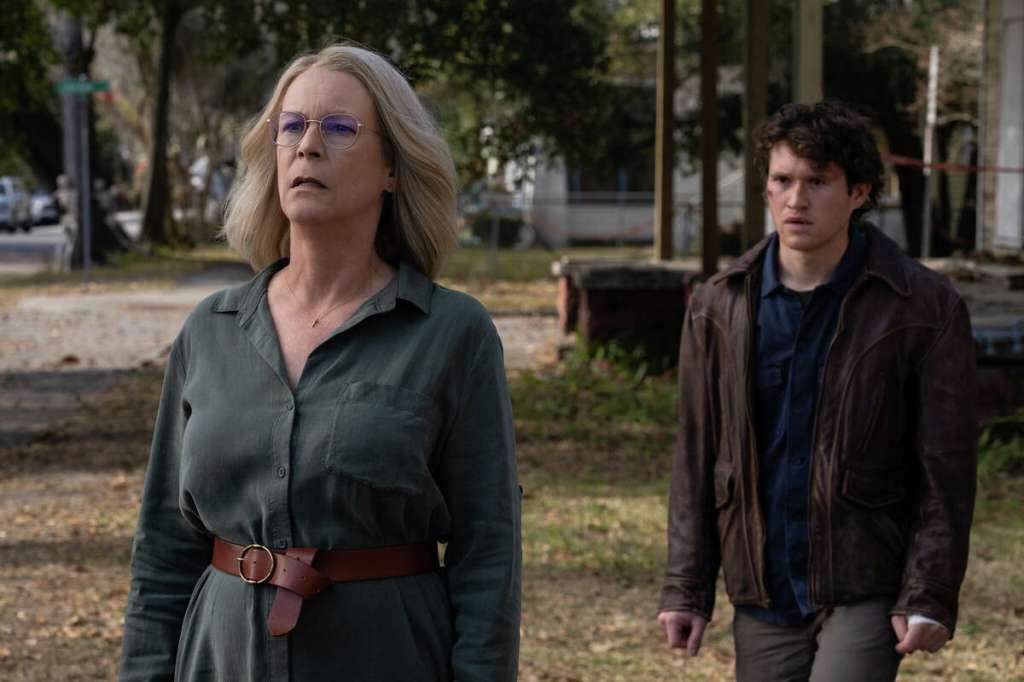
Jamie Lee Curtis as Laurie Strode and Rohan Campbell as Corey Cunningham.

It might sound like I’m grousing that a Halloween movie had Michael Myers in it, largely because I am. To clarify: it feels like Halloween Ends is two movies forced to cohabitate the same screen. One scene of Nightcrawler, switch projectors, one scene of H20, repeat. Both movies look fun, and are made decently well–neither movie pairs well with the other. Or against the original. Full disclosure: a few days before seeing Halloween Ends, I had the immense pleasure of rewatching Carpenter’s 1978 Halloween with a few friends who’d never seen it before, and boy howdy that movie still bangs–patient, careful, composed and shot with an effortless grace. The sequence of Michael attacking Laurie is still absolutely terrifying, and the movie around it is, at least in my opinion, one of the best horror movies ever made. It also, alongside Ends, feels like Goofus and Gallant. Ends wants to chronicle the story of Michael, figure out how the man is made–Halloween posits that the more frightening choice is that he just is, a latent force of nature that breaks a professional psychotherapist to the point of chasing him down with a loaded gun. Ends is lit flat and bright throughout, including a midnight showdown in a kitchen that looks like it’s happening mid-afternoon–Halloween is unafraid of using darkness, letting its shots be flooded with an indiscernible shadow. Ends’ violence is explosive, gruesome, and at several moments almost comedic–Halloween is sparing and visceral, saving it for when it matters most. Ends even uses a direct homage to a slasher movie superlative kill, as Michael, just like in the original, hangs his prey on the wall with one brutal stab. In the original, the shot stays wide, and Michael cocks his head like a puppy. Still gives me chills. In Ends, the camera pans down to watch blood drip down the victim’s foot…? To communicate that…they’re dead? Why? There’s no match cut that the blood droplets set up, there’s no real thematic presence of blood besides the obvious, and like all of Halloween Ends, it’s grim, overwrought, and ultimately competent but pointless. 

Categories
Reviews

The Banshees of Inisherin – Review

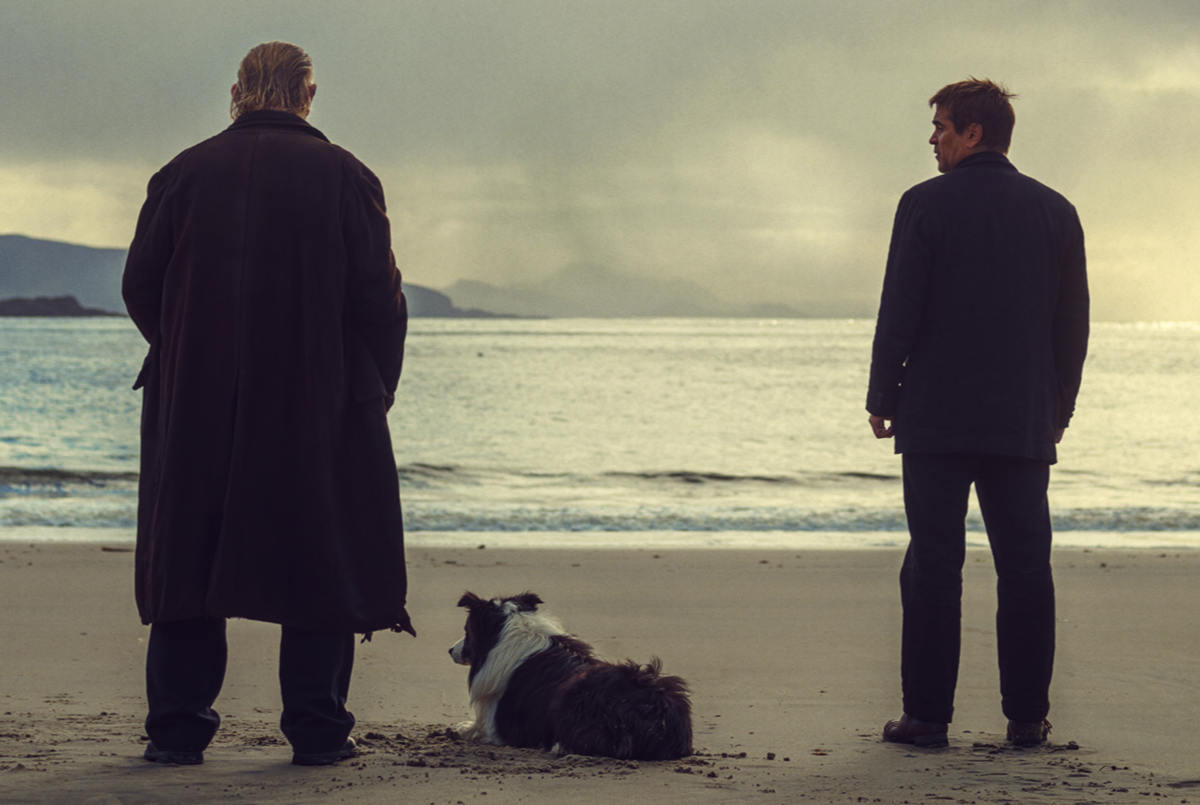
About a quarter of the way into The Banshees of Inisherin, Colin Farrell’s Pádraic bemoans his sudden loneliness. He’s sweet but simple, with a kind of hangdog sincerity Farrell plays to the hilt, and his best (and really singular) friend, an older fiddler Colm (Brendan Gleeson), has just told Pádraic he doesn’t like him anymore. Pádraic is explaining this to the only other person that’ll really tolerate his company, a manic, horny child, who takes this information in and mulls on it, head in hands. “I think he’s depressed,” Pádraic whispers. The kid responds “why doesn’t he just push it down like the rest of us?” This is a perfectly emblematic cross-section of the larger film, a story about loneliness, darkly and hilariously told, with an unusual (for writer/director Martin McDonagh, that is) amount of restraint. Long-time fans of his work may find themselves wishing for a little more action, but as one of those aforementioned fans, I found myself quite enchanted by Banshees.

The title comes from a song Colm’s writing, a four-piece composition inspired by the imagined banshees of the tiny coastal island that the movie never leaves. Banshees are portents of death, and if you’re at all familiar with McDonagh’s earlier work–movies like In Bruges and Seven Psychopaths, and a decorated playwriting career including The Pillowman and The Lieutenant of Inishmore–you’re going into this movie expecting a fair amount of death anyways. But while Banshees is pocked with violence, swift, painful spurts that dot daily life on the titular island, it’s hardly the bloodbath you’d reasonably expect; rather, violence constantly haunts the peripheries. Banshees is set in 1923, next door to the Irish Civil War, and we regularly see plumes of smoke in the distance, hear the crack of gunfire echo across the channel from the mainland. Inisherin is a fictional island, and the war might never reach its shores, but it never, never leaves the world, a choice that–along with McDonagh’s own reputation–fills the movie with a grimly comedic dread. It’s tightly wound, and when things happen (and don’t get it twisted, this is the man that made Three Billboards, things happen), there’s a notable remove, almost like we’re being hurried along past the point of impact. There’s some excellent staging and visual work in this pursuit, too, as cinematographer Ben Davis keeps the camera just on the other side of the window, wide on the countryside, or sometimes literally in the clouds, not letting us get too cozy with the humans below. Around here, Banshees seems to argue, a place where men will mutilate themselves before speaking an honest thought clearly, violence is inescapable. Don’t look too hard, it says, just keep your eyes forward, there’s more behind and there’s more ahead too. 

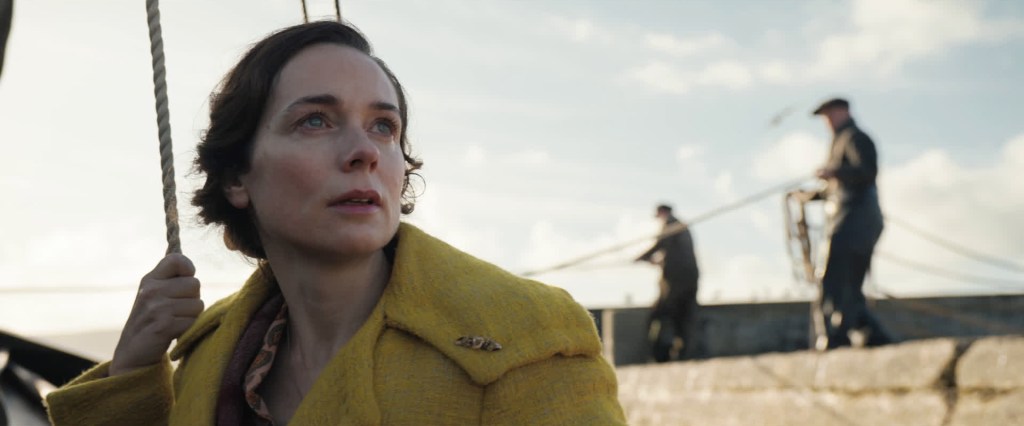
Kerry Condon as Siobhan.

The only character that seems to have a means and will to escape Inisherin’s vicious cycle is Pádraic’s sister, Siobhan, played by the superb Kerry Condon. Even among the uniformly excellent lead cast–Farrell, Gleeson, and a delightfully unhinged Barry Keoghan as the aforementioned horny child–Condon deserves special praise for her magnetic prism of anger, sorrow, repression, and determination that never once feels broad or easy. She’s an intelligent but ill-liked woman on the outside of these outsiders, the beating heart of the movie, and when she leaves its world much of its brightness does too. The things the men left behind do get harder to watch, less funny and more nerve-wracking, until at some point Banshees just kind of stops. There’s not a single dramatic event, reunion or otherwise, that the story hinges on; rather, it reaches the end of its thought, and then roll credits. I thought it compelling and effective, but would understand a certain frustration with this, especially in a movie this neatly made. 

All in all, I quite liked Banshees. There’s a deliberate understatement about it, atypical for McDonagh films, atypical for stories about masculinity, atypical for comedies, atypical for movies starring Colin Farrell, poor man, and all of that works in its favor. You watch it, and you know, you just know what it could burst out into at any second–but it doesn’t. And if that doesn’t frustrate you, and I hope it doesn’t, then it’ll captivate you.

Categories
Reviews

Smile – Review

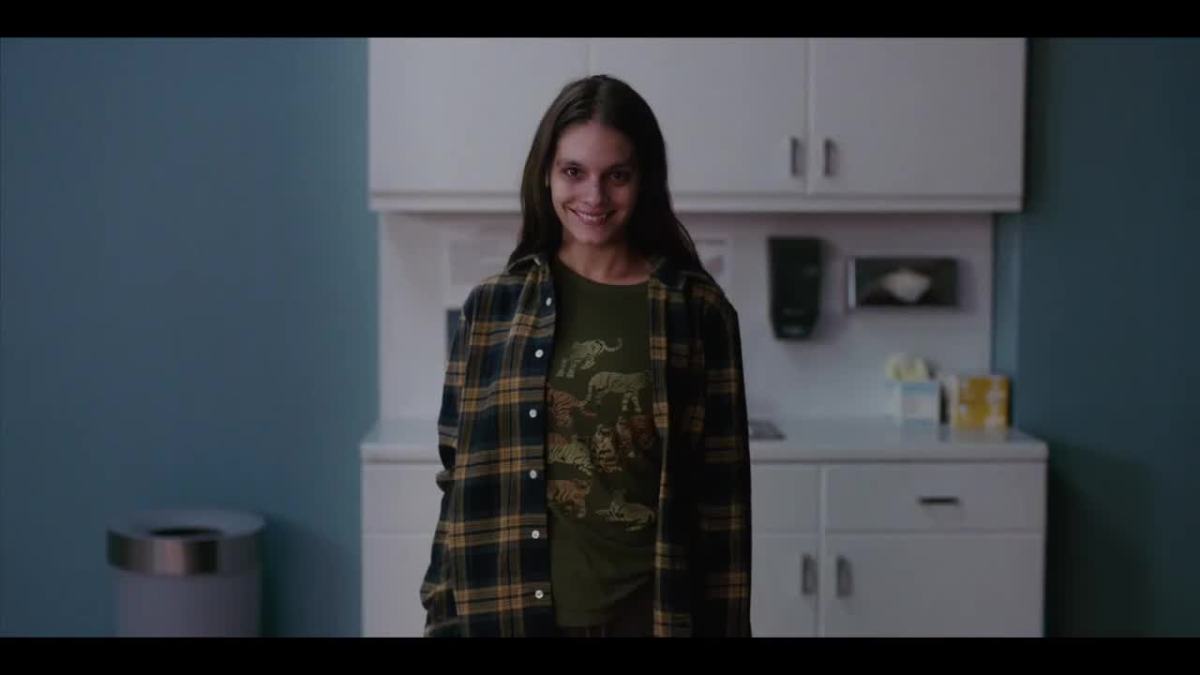
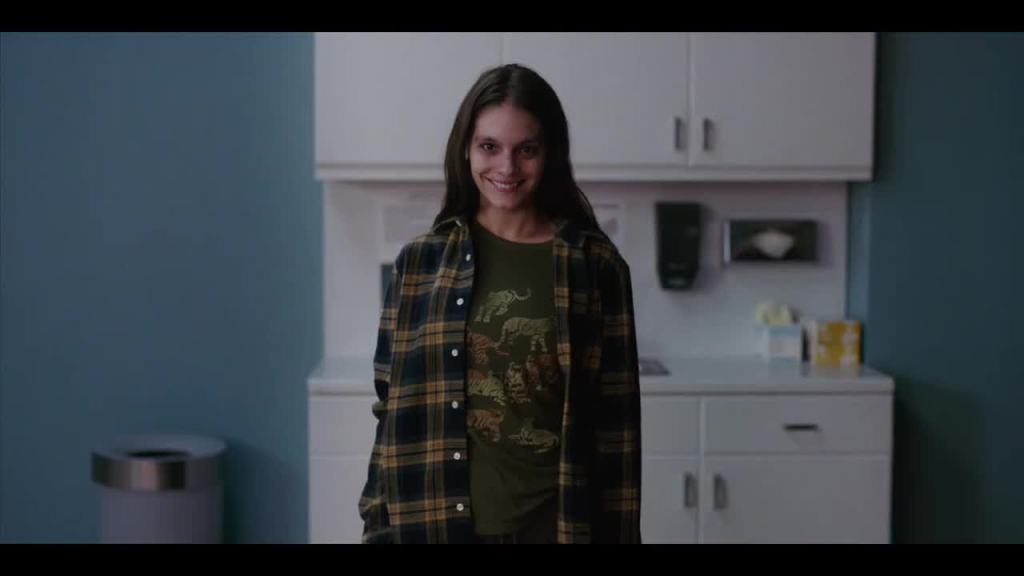
Caitlin Stasey as Laura Weaver/The Spooky Smiling Fella That Kill You Good.

Marcus Aurelius once wrote “things in themselves have no power to extort a verdict from you”–or, in essence, it’s fine to not have a hot take on something. It’s probably already indicative of the quality of Smile that I spent its runtime thinking about Marcus Aurelius rather than a scary smile or whatever, and if you’d like, you can now do what I should have done at the movie; namely, take this early pithy little point, get out of here, and spend the next bit of your life doing something better. Read something non-fiction! Go for a walk! It’s lovely outside. 

Still here? Fine. I’ll only take a few minutes of your time, and in that time I hope I can convince you to not make my mistake. 

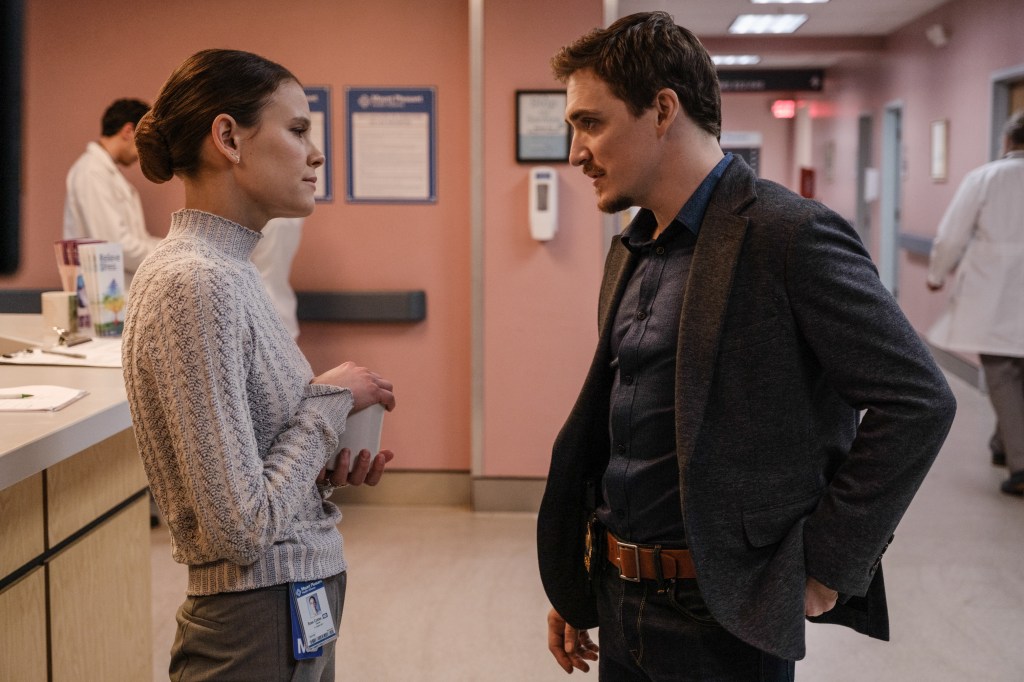
Smile is adapted from writer/director Parker Finn’s 2020 short Laura Hasn’t Slept, and wow, does it feel like it. Or to be more accurate, the opening sequence is a clinically tense and unnerving short with some genuine visual flair, with a listless, boilerplate movie stapled onto it, dragging its feet through the rest of its runtime. But for those first ten minutes! Dr. Rose Cotter (Sosie Bacon), a hospital psychiatrist, walks into a holding room at the end of her shift to help Laura (Caitlin Stasey), a grad student who’s clearly unwell. She’s whimpering in the corner, she looks like she hasn’t slept in days, she’s variously whispering and shrieking about an entity only she can see. It’s smiling at her, she says, wearing the faces of people she knows. Then she screams, knocks over the furniture, and–as Dr. Cotter calls for help–locks eyes with her, freezes into a rictus grin, and slowly and deliberately cuts her own throat. It’s fun! Or, you know, it was fun for me. Your mileage may vary. It’s undeniably well-made, at least. The set is sparse, the music is basically absent, Finn and cinematographer Charlie Sarroff keep the shot dead-on, as the actors take turns delivering lines directly into the camera. They can’t hide, and neither can we. It’s clever, and it works, and then this sequence ends and almost every ounce of creativity, of panache, even of the titular smile goes out the window. 

Sosie Bacon as Dr. Rose Cotter and Kyle Gallner as Joel.

I should clarify something here, I think. Smile is, in a lot of ways, a cheap movie. I don’t begrudge it this–point in fact, I love cheap horror movies. I walked in expecting a cheap horror movie, because Smile is squarely marketed as a cheap horror movie, the kind of thing you put on when it’s 11PM at your junior high sleepover and you don’t want to go to bed just yet (e.g., in the weeks before its release, Paramount paid actors to stand in the crowd at MLB games and grin wickedly into the broadcast cameras). But cheap horror movies used to have a certain self-knowledge, which Smile lacks pretty desperately, I realized as the movie reveals its grand design–I’m about trauma, it says. I’m a serious horror movie, and I’m about trauma. This isn’t a bad thing. Several horror movies, including Smile’s clear inspirations The Babadook and It Follows, deal explicitly and textually with trauma as a malignant force using the parlance of the genre. Both of these movies, though, along with the other exemplars of the genre, have a clear and informed point, something worth saying, a nuanced position in both narrative and metatextual terms. Smile has a scary smile, and barely even that. I didn’t mention Marcus Aurelius earlier idly–I would have given anything for Smile to lean into itself, to be the fun, nerve-rattling spook-em-up that it absolutely excels at in the opening sequence. There’s flashes of it throughout, in dream sequences that continually taunt us as visions from a better, more honest, more entertaining version of the movie. But no, Smile insists–I’m about trauma. I’m a serious horror movie, and I’m about trauma. We can’t have fun here, I’m about trauma. We can’t bring back our scary smile at basically any point besides the first and last acts, I’m about trauma. We can afford to paper over absolutely insane leaps of logic, and the lack thereof, because I’m about trauma. We’re going to show you a brightly-lit close-up of the main antagonist, and it’s going to look like the silliest thing you’ve ever seen, a Bratz doll that you threw in the dryer, but we need you to understand it as frightening because it’s related to the main character’s backstory, and by God I am a Serious Horror Movie, and I’m About Trauma. And when we finally calm Smile down, quiet its yelling, tire out its running around New Jersey, promise to listen very carefully, what does this Serious Horror Movie have to say about Trauma? It proudly opens its mouth and declares “it would be better for everyone if you left and killed yourself.”

I suspect, and this is incredibly the idle wonderings of an amateur with barely any industry insight, that the critical and commercial success of the A24 brand of creepshow–Hereditary, The VVitch, and its stylistic siblings like the aforementioned Babadook and It Follows–has led to a belief that so-called “elevated” horror is easy. Find yourself a white family with issues, roll the camera a little bit, hurt a violin in the background, and you’re set, rake in the dough and the 88% on Rotten Tomatoes! But what this supposition ignores, lethally so, is that doing this approach well is incredibly difficult, requiring a huge amount of care and precision. There’s no shame in having a monster jump out at the camera, but if you want to wring fear out of, say, a family with PTSD, you have to fine-tune the dynamics of your characters and the world the same way that John Carpenter would calibrate prosthetics for The Thing. You can’t just extend a solid proof of concept by nearly two hours, say it’s about trauma because the main character’s had a tough home life, and call it a day.

I’m pontificating here because I’m bummed about what I have to say in conclusion: ultimately, I found myself alternatively bored and frustrated with Smile, a movie that really, really could have been enjoyable. There’s a good movie somewhere in here, but it didn’t survive the transplant to feature length. I couldn’t say who’s to blame, nor would I want to–there’s some talented folks on this thing, and I’ll check out whatever they do next. I just hope it’s either more or less about trauma than this. 

Design a site like this with WordPress.com
Get started