Categories
Reviews

Tár – Review

“If you’re here, then you already know who she is.” In the first scene of Tár, New Yorker writer Adam Gopnik (playing himself) begins an interview with Lydia Tár, listing her many, many accolades to the crowd–she’s one of the rare recipients of an EGOT, a personal favorite student of Leonard Bernstein, a internationally renowned conductor and one of the only women to ever hold prestigious residencies from Boston to her current Berlin. From the back of the house, a woman watches. We only see the back of her head. We won’t know who she is or what she’ll do until far into the movie, when it’s too late. But the interviewer is right; she does know who Lydia Tár is. It’s a queasily effective setup for an expansive, meditative, and in a word, magnificent film, that throughout its nearly three-hour runtime, puts us in the same seat as this anonymous woman: we, too, learn who Lydia Tár is. And we, too, can’t help but watch. 

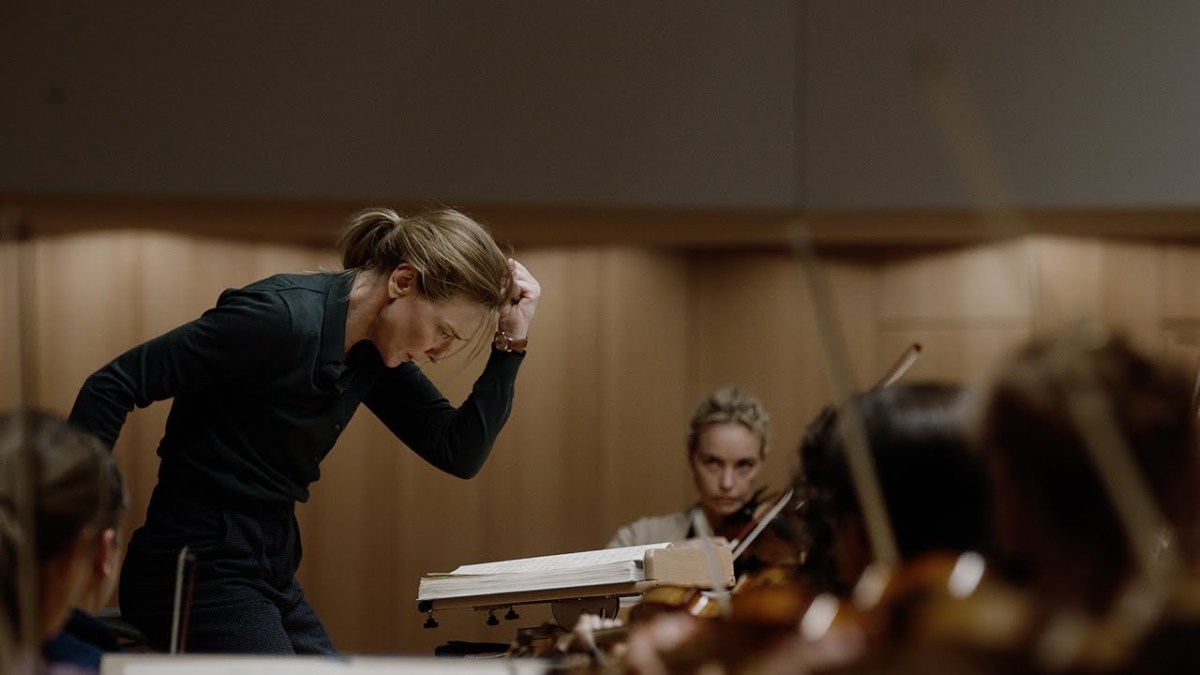
Tár, an astounding Cate Blanchett, clearly has more going on than her prodigious talent. She’s earned all her laurels, she’s an eloquent speaker and a polyglot, she’s established her own scholarship foundation to further the careers of other female conductors–she’s also, as we see in the very first shot, off-balance, twitchy, as if there’s a mosquito circling her neck. Her silence and care is matched by the general lack of underscoring throughout, and it makes the noise of a car, a bug, a person feel like an intrusion on her hermetically sealed life. We see her stopped dead in her tracks by the faint sound of a doorbell, hush the sputtering of a match lighting a candle, and a harrowing sequence featuring her as a guest teacher at Julliard perfectly encapsulates her as unremittingly brilliant, lightning-quick, and an inveterate asshole. It’s an arresting introduction, made better still by Blanchett, who’s doing some of the best work of her career, showcasing a woman at the height of her powers, capable of breathtaking works of art–some scenes of her conducting Mahler are shot almost like a documentary, letting the music and the actor speak for themselves–and stunning depths of cruelty. Early on, Tár takes her wife’s daughter to school, sends her off, and then approaches the daughter’s bully like a wolf walking towards a fawn. I won’t spoil what she does, but what a showcase of her dominance, in more ways than one. 
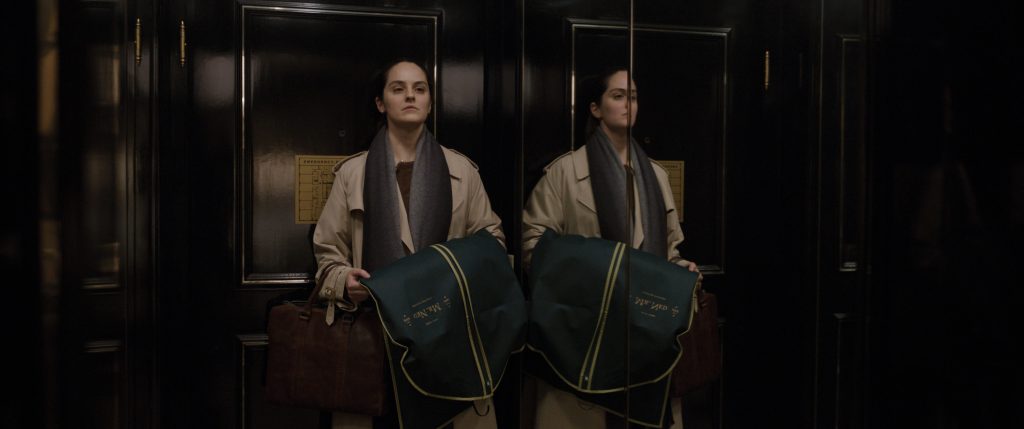
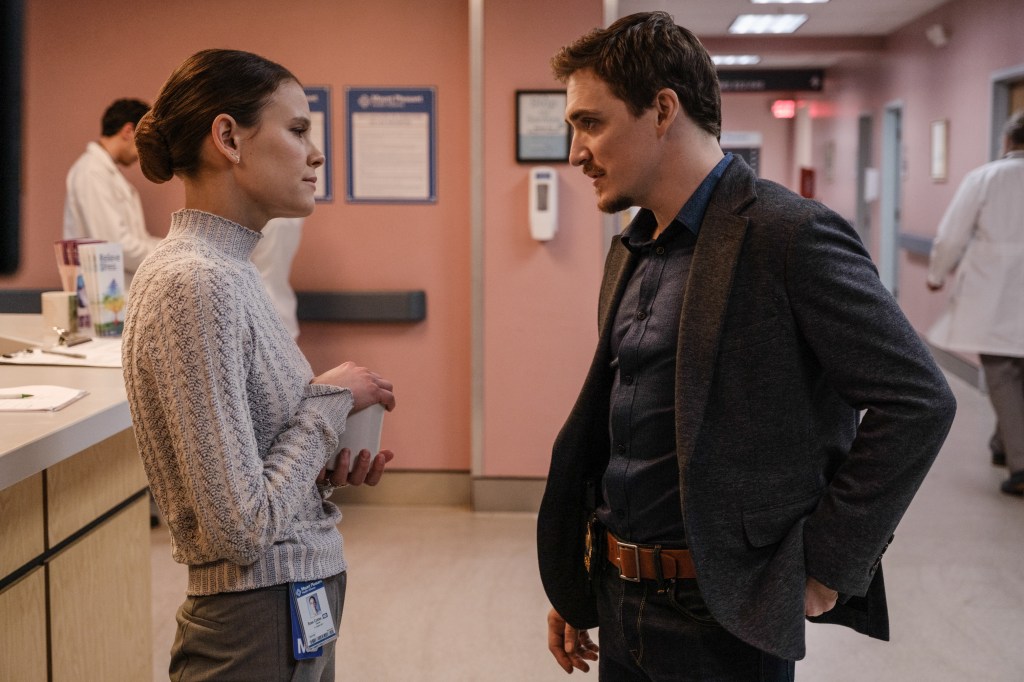
Noémie Merlant as Francesca.

Throughout the film, Tár’s drive to control is played against the very nature and composition of the movie itself. In that interview with Gopnik, she talks, with a chilling, magnetic clarity, about time. She doesn’t discover anything in performance, she says; she’s not responding to the orchestra, or trying something new, or letting the music carry her. No: “the reality is that right from the very beginning I know precisely what time it is, and the exact moment that you and I will arrive at our destination together.” But the world around her, both in a narrative sense and in the construction of the film, will not allow her this jurisdiction, plaguing her with old demons coming back to roost. Director Todd Field fills her home, the brutalist concrete of Berlin, with tiny instances, dreamlike sequences and sometimes just dream sequences, that she cannot control. They don’t always have a direct plot relevance, and I suspect they may bore some audiences expecting a tight drama (two people did walk out of my screening) but as a sort of tone poem, it’s unparalleled. The bed on fire, the lovers through water, a single black dog–it’s not all directly clear, nor should it be, nor does it need to be. Tár runs for exercise, and at one point in a public park, hears screaming. She tries to find its source, and cannot. Next scene. 

I haven’t stopped thinking about this movie since I saw it, and though there’s so much more I’d like to note and praise, from the perfectly executed set work to the quietly ruinous performances to the single most devastating use of Monster Hunter cosplay ever recorded, the best thing to do might just be to cut myself off early. The movie has too much to say, and I’d be doing it a disservice to speak for it. For example, on a thematic level, Tár touches on ideas of cancel culture and sexual and gender identites, but it’s never crass enough to address these things by name; it doesn’t want to be broad cultural pedagogy, but a dissection of a self-made woman picking at her own seams. Here’s what this is, it says; draw your own conclusions. The rest of the movie follows suit. Sure, it’s about ten million things, and I can’t wait to read (and maybe write) those essays, but for a review, I think it’s good enough to say they’re there, and they’re fascinating. Tár is, like its protagonist, complex, captivating, and not easily defined. Except to say that it’s phenomenal, my favorite movie of the year so far. 
Categories
Reviews

Halloween Ends – Review

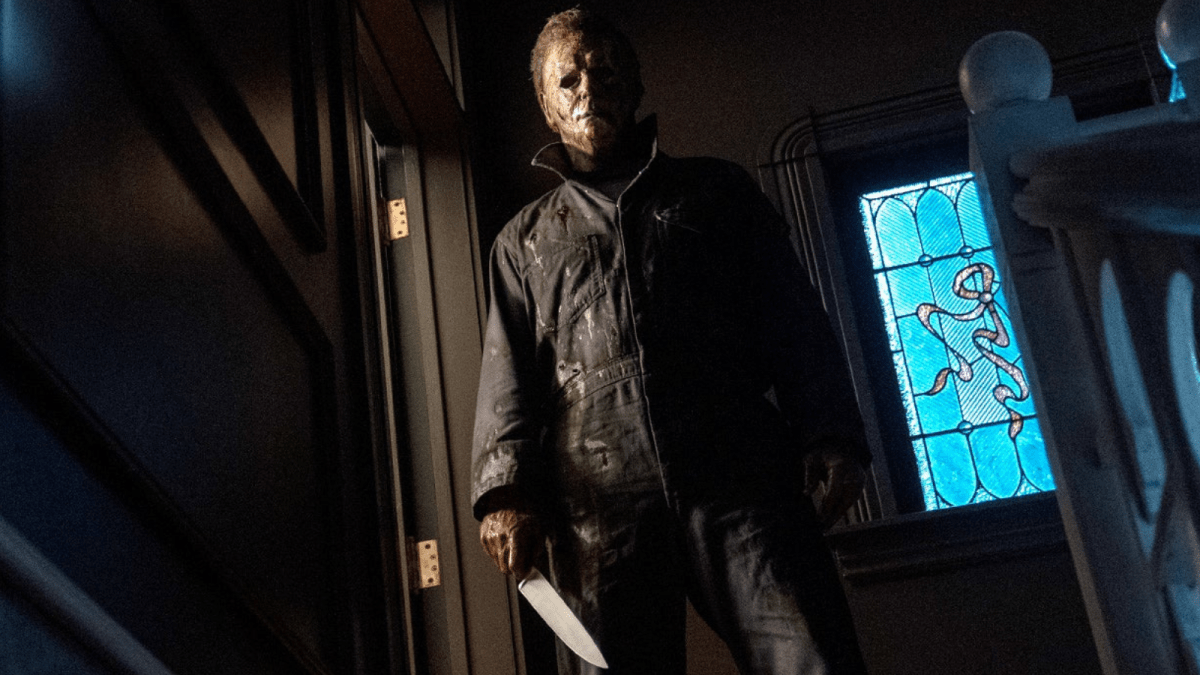
If you’re not up on your lore and are confused by the litany of sequels, spin-offs, and reimaginings, Halloween Ends is the conclusion to the most recent sequel/spinoff/reimagining trilogy, and allegedly, the end of the series as a whole (but come on, guys, we know you’ll exhume that corpse the second you think you could make more money off it). This trilogy has the distinct advantage of being entirely helmed by the same person throughout, David Gordon Green, a talented director with a solid resume. Unfortunately for him, and for us, he’s had to make Halloween movies, something he seems to resent. Here, he wants to tell serious stories and guide meditations on violence, but if that violence takes the form of the actual Michael Myers, it’s hard to follow his train of thought. It’s the thing that, in my opinion, somewhat undermines the entire affair. In the 2018 Halloween, it’s hard to dismiss Laurie Strode as addled and broken because it’s, you know, Michael Myers. In Halloween Kills, you can’t take any cautionary statements about mob justice seriously if the mob is organized against, you know, Michael Myers. And in Ends, when Laurie starts pontificating about the nature of evil, in another movie you’d absolutely agree with the other characters, who uniformly dismiss her as a bit of a nutbag. But here? You want to take everyone else by the shoulders, shake them, and yell, “you’re in a Halloween movie! With, you know, Michael Myers!”

That’s a sour intro, and it’s not to say that the film’s floor-to-ceiling bad. Halloween Ends takes an ambitious swing that I will not spoil but takes up most of its runtime, and it largely works. The cast is game, the crew is on point, it’s a perfectly functional and, at times, halfway interesting Taxi Driver pastiche. But this movie is yoked to an IP that won’t stop getting in the way, and we’re reminded every five minutes or so of a Halloween mythology that Ends cares deeply about but simultaneously doesn’t have much to say on. There’s small-town drama happening and Michael and Laurie won’t stop poking their heads in and reminding us this isn’t actually a small-town drama, it’s a fated clash between titans. It all starts to feel a bit silly and that, I think, is where the movie lost me. Not to say that horror shouldn’t or can’t be silly–I’m one of the entire Evil Dead trilogy’s bravest and most special soldiers–but when Halloween Ends insists that it’s a serious movie, we watch it as a serious movie, and the cornucopia of times it’s overblown, bizarre, or straining the limits of plausibility stop being fun little nitpicks and start being fatal flaws. Take, for example, Laurie’s granddaughter Allyson (Andi Matichak) and her burgeoning romance with the town pariah Corey (Rohan Campbell). Allyson falls near-instantly for Corey, a visibly and violently unwell young man, and within seconds of meeting him, decides that they’re fated to be together and refuses to ever, ever cut ties. There are two paths to make this plotline work: you could paper over it and just let it happen because This Is What Happens In The Movie, or you could spend the time to pace it out, provide the detail, let the characters grow. Ends wants to take this second path, and I believe, given more time and space, it could have. Corey’s established from the jump as a sympathetic character, consistently in the wrong place at the wrong time, and Allyson’s clearly portrayed as a woman absolutely sick of midwestern suburbia who’s already got a history of unlucky relationships with violent jerks (a local police officer played by a pitch-perfect Jesse C. Boyd). But it doesn’t have that time to let this plot sit in the proving drawer–here’s Laurie Strode writing her memoir. We can’t give these characters room to breathe, because oooooooooh Michael’s back! 

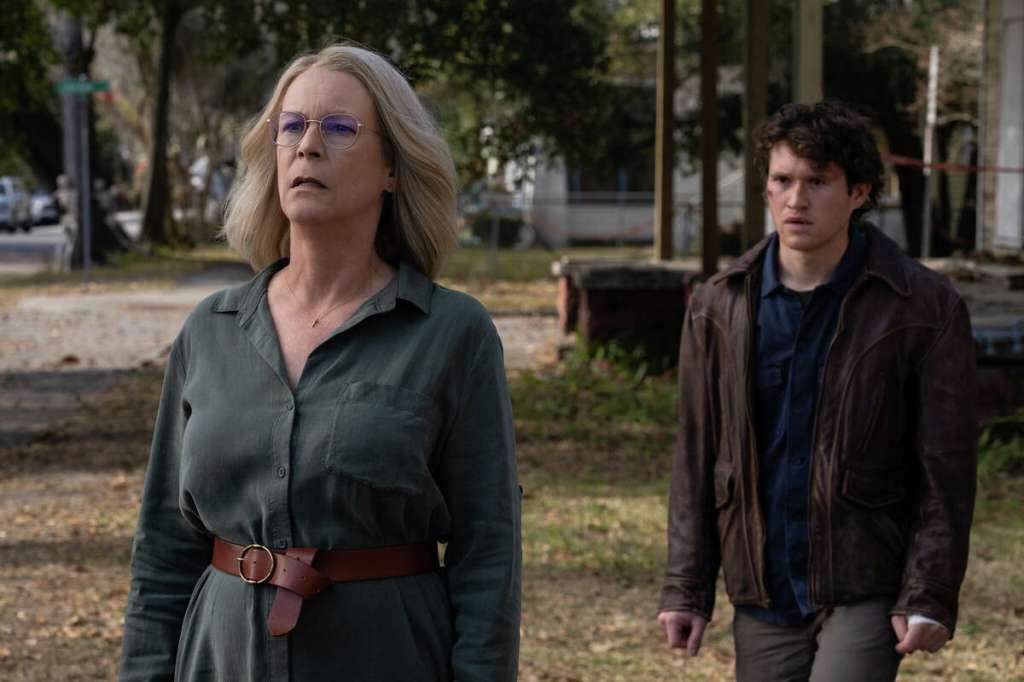
Jamie Lee Curtis as Laurie Strode and Rohan Campbell as Corey Cunningham.

It might sound like I’m grousing that a Halloween movie had Michael Myers in it, largely because I am. To clarify: it feels like Halloween Ends is two movies forced to cohabitate the same screen. One scene of Nightcrawler, switch projectors, one scene of H20, repeat. Both movies look fun, and are made decently well–neither movie pairs well with the other. Or against the original. Full disclosure: a few days before seeing Halloween Ends, I had the immense pleasure of rewatching Carpenter’s 1978 Halloween with a few friends who’d never seen it before, and boy howdy that movie still bangs–patient, careful, composed and shot with an effortless grace. The sequence of Michael attacking Laurie is still absolutely terrifying, and the movie around it is, at least in my opinion, one of the best horror movies ever made. It also, alongside Ends, feels like Goofus and Gallant. Ends wants to chronicle the story of Michael, figure out how the man is made–Halloween posits that the more frightening choice is that he just is, a latent force of nature that breaks a professional psychotherapist to the point of chasing him down with a loaded gun. Ends is lit flat and bright throughout, including a midnight showdown in a kitchen that looks like it’s happening mid-afternoon–Halloween is unafraid of using darkness, letting its shots be flooded with an indiscernible shadow. Ends’ violence is explosive, gruesome, and at several moments almost comedic–Halloween is sparing and visceral, saving it for when it matters most. Ends even uses a direct homage to a slasher movie superlative kill, as Michael, just like in the original, hangs his prey on the wall with one brutal stab. In the original, the shot stays wide, and Michael cocks his head like a puppy. Still gives me chills. In Ends, the camera pans down to watch blood drip down the victim’s foot…? To communicate that…they’re dead? Why? There’s no match cut that the blood droplets set up, there’s no real thematic presence of blood besides the obvious, and like all of Halloween Ends, it’s grim, overwrought, and ultimately competent but pointless. 

Categories
Reviews

The Banshees of Inisherin – Review

About a quarter of the way into The Banshees of Inisherin, Colin Farrell’s Pádraic bemoans his sudden loneliness. He’s sweet but simple, with a kind of hangdog sincerity Farrell plays to the hilt, and his best (and really singular) friend, an older fiddler Colm (Brendan Gleeson), has just told Pádraic he doesn’t like him anymore. Pádraic is explaining this to the only other person that’ll really tolerate his company, a manic, horny child, who takes this information in and mulls on it, head in hands. “I think he’s depressed,” Pádraic whispers. The kid responds “why doesn’t he just push it down like the rest of us?” This is a perfectly emblematic cross-section of the larger film, a story about loneliness, darkly and hilariously told, with an unusual (for writer/director Martin McDonagh, that is) amount of restraint. Long-time fans of his work may find themselves wishing for a little more action, but as one of those aforementioned fans, I found myself quite enchanted by Banshees.

The title comes from a song Colm’s writing, a four-piece composition inspired by the imagined banshees of the tiny coastal island that the movie never leaves. Banshees are portents of death, and if you’re at all familiar with McDonagh’s earlier work–movies like In Bruges and Seven Psychopaths, and a decorated playwriting career including The Pillowman and The Lieutenant of Inishmore–you’re going into this movie expecting a fair amount of death anyways. But while Banshees is pocked with violence, swift, painful spurts that dot daily life on the titular island, it’s hardly the bloodbath you’d reasonably expect; rather, violence constantly haunts the peripheries. Banshees is set in 1923, next door to the Irish Civil War, and we regularly see plumes of smoke in the distance, hear the crack of gunfire echo across the channel from the mainland. Inisherin is a fictional island, and the war might never reach its shores, but it never, never leaves the world, a choice that–along with McDonagh’s own reputation–fills the movie with a grimly comedic dread. It’s tightly wound, and when things happen (and don’t get it twisted, this is the man that made Three Billboards, things happen), there’s a notable remove, almost like we’re being hurried along past the point of impact. There’s some excellent staging and visual work in this pursuit, too, as cinematographer Ben Davis keeps the camera just on the other side of the window, wide on the countryside, or sometimes literally in the clouds, not letting us get too cozy with the humans below. Around here, Banshees seems to argue, a place where men will mutilate themselves before speaking an honest thought clearly, violence is inescapable. Don’t look too hard, it says, just keep your eyes forward, there’s more behind and there’s more ahead too. 

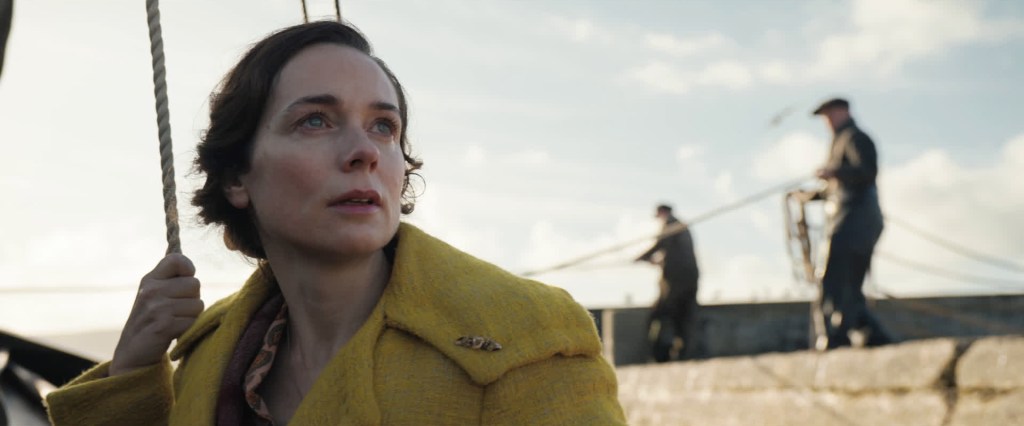
Kerry Condon as Siobhan.

The only character that seems to have a means and will to escape Inisherin’s vicious cycle is Pádraic’s sister, Siobhan, played by the superb Kerry Condon. Even among the uniformly excellent lead cast–Farrell, Gleeson, and a delightfully unhinged Barry Keoghan as the aforementioned horny child–Condon deserves special praise for her magnetic prism of anger, sorrow, repression, and determination that never once feels broad or easy. She’s an intelligent but ill-liked woman on the outside of these outsiders, the beating heart of the movie, and when she leaves its world much of its brightness does too. The things the men left behind do get harder to watch, less funny and more nerve-wracking, until at some point Banshees just kind of stops. There’s not a single dramatic event, reunion or otherwise, that the story hinges on; rather, it reaches the end of its thought, and then roll credits. I thought it compelling and effective, but would understand a certain frustration with this, especially in a movie this neatly made. 

All in all, I quite liked Banshees. There’s a deliberate understatement about it, atypical for McDonagh films, atypical for stories about masculinity, atypical for comedies, atypical for movies starring Colin Farrell, poor man, and all of that works in its favor. You watch it, and you know, you just know what it could burst out into at any second–but it doesn’t. And if that doesn’t frustrate you, and I hope it doesn’t, then it’ll captivate you.

Categories
Reviews

Smile – Review

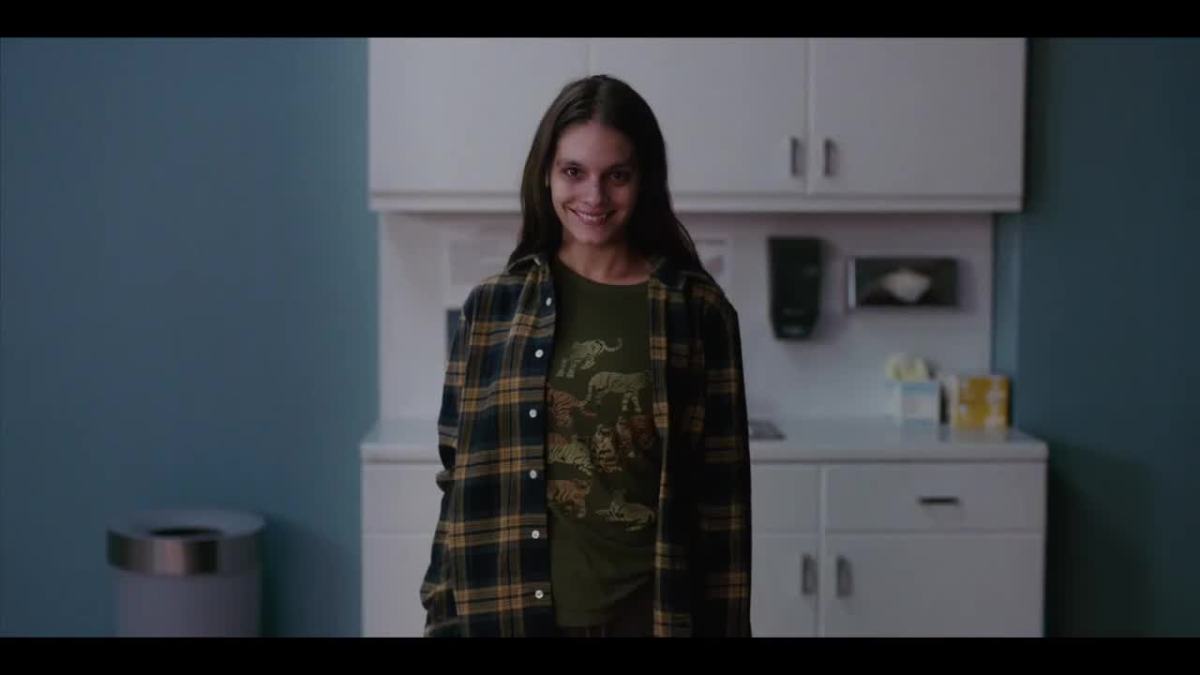
Caitlin Stasey as Laura Weaver/The Spooky Smiling Fella That Kill You Good.

Marcus Aurelius once wrote “things in themselves have no power to extort a verdict from you”–or, in essence, it’s fine to not have a hot take on something. It’s probably already indicative of the quality of Smile that I spent its runtime thinking about Marcus Aurelius rather than a scary smile or whatever, and if you’d like, you can now do what I should have done at the movie; namely, take this early pithy little point, get out of here, and spend the next bit of your life doing something better. Read something non-fiction! Go for a walk! It’s lovely outside. 

Still here? Fine. I’ll only take a few minutes of your time, and in that time I hope I can convince you to not make my mistake. 

Smile is adapted from writer/director Parker Finn’s 2020 short Laura Hasn’t Slept, and wow, does it feel like it. Or to be more accurate, the opening sequence is a clinically tense and unnerving short with some genuine visual flair, with a listless, boilerplate movie stapled onto it, dragging its feet through the rest of its runtime. But for those first ten minutes! Dr. Rose Cotter (Sosie Bacon), a hospital psychiatrist, walks into a holding room at the end of her shift to help Laura (Caitlin Stasey), a grad student who’s clearly unwell. She’s whimpering in the corner, she looks like she hasn’t slept in days, she’s variously whispering and shrieking about an entity only she can see. It’s smiling at her, she says, wearing the faces of people she knows. Then she screams, knocks over the furniture, and–as Dr. Cotter calls for help–locks eyes with her, freezes into a rictus grin, and slowly and deliberately cuts her own throat. It’s fun! Or, you know, it was fun for me. Your mileage may vary. It’s undeniably well-made, at least. The set is sparse, the music is basically absent, Finn and cinematographer Charlie Sarroff keep the shot dead-on, as the actors take turns delivering lines directly into the camera. They can’t hide, and neither can we. It’s clever, and it works, and then this sequence ends and almost every ounce of creativity, of panache, even of the titular smile goes out the window. 

Sosie Bacon as Dr. Rose Cotter and Kyle Gallner as Joel.

I should clarify something here, I think. Smile is, in a lot of ways, a cheap movie. I don’t begrudge it this–point in fact, I love cheap horror movies. I walked in expecting a cheap horror movie, because Smile is squarely marketed as a cheap horror movie, the kind of thing you put on when it’s 11PM at your junior high sleepover and you don’t want to go to bed just yet (e.g., in the weeks before its release, Paramount paid actors to stand in the crowd at MLB games and grin wickedly into the broadcast cameras). But cheap horror movies used to have a certain self-knowledge, which Smile lacks pretty desperately, I realized as the movie reveals its grand design–I’m about trauma, it says. I’m a serious horror movie, and I’m about trauma. This isn’t a bad thing. Several horror movies, including Smile’s clear inspirations The Babadook and It Follows, deal explicitly and textually with trauma as a malignant force using the parlance of the genre. Both of these movies, though, along with the other exemplars of the genre, have a clear and informed point, something worth saying, a nuanced position in both narrative and metatextual terms. Smile has a scary smile, and barely even that. I didn’t mention Marcus Aurelius earlier idly–I would have given anything for Smile to lean into itself, to be the fun, nerve-rattling spook-em-up that it absolutely excels at in the opening sequence. There’s flashes of it throughout, in dream sequences that continually taunt us as visions from a better, more honest, more entertaining version of the movie. But no, Smile insists–I’m about trauma. I’m a serious horror movie, and I’m about trauma. We can’t have fun here, I’m about trauma. We can’t bring back our scary smile at basically any point besides the first and last acts, I’m about trauma. We can afford to paper over absolutely insane leaps of logic, and the lack thereof, because I’m about trauma. We’re going to show you a brightly-lit close-up of the main antagonist, and it’s going to look like the silliest thing you’ve ever seen, a Bratz doll that you threw in the dryer, but we need you to understand it as frightening because it’s related to the main character’s backstory, and by God I am a Serious Horror Movie, and I’m About Trauma. And when we finally calm Smile down, quiet its yelling, tire out its running around New Jersey, promise to listen very carefully, what does this Serious Horror Movie have to say about Trauma? It proudly opens its mouth and declares “it would be better for everyone if you left and killed yourself.”

I suspect, and this is incredibly the idle wonderings of an amateur with barely any industry insight, that the critical and commercial success of the A24 brand of creepshow–Hereditary, The VVitch, and its stylistic siblings like the aforementioned Babadook and It Follows–has led to a belief that so-called “elevated” horror is easy. Find yourself a white family with issues, roll the camera a little bit, hurt a violin in the background, and you’re set, rake in the dough and the 88% on Rotten Tomatoes! But what this supposition ignores, lethally so, is that doing this approach well is incredibly difficult, requiring a huge amount of care and precision. There’s no shame in having a monster jump out at the camera, but if you want to wring fear out of, say, a family with PTSD, you have to fine-tune the dynamics of your characters and the world the same way that John Carpenter would calibrate prosthetics for The Thing. You can’t just extend a solid proof of concept by nearly two hours, say it’s about trauma because the main character’s had a tough home life, and call it a day.

I’m pontificating here because I’m bummed about what I have to say in conclusion: ultimately, I found myself alternatively bored and frustrated with Smile, a movie that really, really could have been enjoyable. There’s a good movie somewhere in here, but it didn’t survive the transplant to feature length. I couldn’t say who’s to blame, nor would I want to–there’s some talented folks on this thing, and I’ll check out whatever they do next. I just hope it’s either more or less about trauma than this. 

Categories
Reviews

The Old Guard – Review

It’s a shame, for many reasons, that movie theatres are locked down right now–I’d love to see how The Old Guard, Netflix’s new superhero movie, would have played alongside its box-office competition. You’d be entirely forgiven for overlooking it, a mid-budget adaptation of a comic book you probably haven’t heard of. It’s not a perfect film. it’s intermittently muddy and certainly overlong. It is, however, a clear and immediate standout, and if there were any justice in the world, it would immediately become the pacesetter for the rest of the genre, because despite its handful of faults it is kinetic, grippingly human, and an absolute blast.

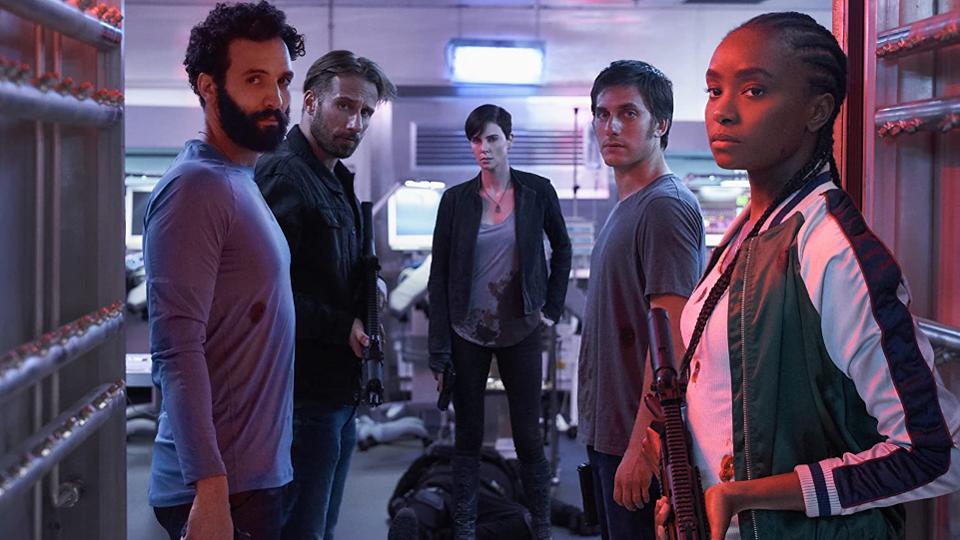
Charlize Theron plays Andromache of Scythia, better known as Andy, one of four freedom-fighting warriors afflicted with an apparent inability to die. She’s the de facto leader of her team by virtue of experience; Nicky (Luca Marinelli) and Joe (Marwan Kenzari) have been around since the Crusades and Booker (Matthias Schoenaerts) first failed to pass away in service of Napoleon, but Andy has been around for at least thousands of years longer; when pressed with “how old?” she responds with a shuttered “too old.” Charlize Theron has been more recently known, with good reason, as a fighter–think Atomic Blonde or heck, this blog’s namesake, Mad Max: Fury Road–but The Old Guard, with an unusual amount of restraint for a superhero movie, lets her emotional performance take center stage. The role asks a lot of her, but Theron effortlessly delivers; Andy has believably spent the last couple millenia steeped in both the art of killing and the loss that comes with it, and this ennui permeates every aspect of her work. It’s a surprisingly delicate portrayal, and one that pairs well with the rest of the cast; her loneliness plays brilliantly against the shimmering love between Nicky and Joe, and her world-weariness illuminates the newness of Booker’s own grief. Andy and her crew spend their time anonymously traveling the world and rescuing those that need it, but both she and the larger plot are shaken by the discovery of a new immortal, Nile (KiKi Layne), an American marine in Afghanistan who bleeds to death and then, well, doesn’t. Even through these supernatural happenings, though, The Old Guard is willing to stand back and let its characters breathe, and the results are oddly captivating. 

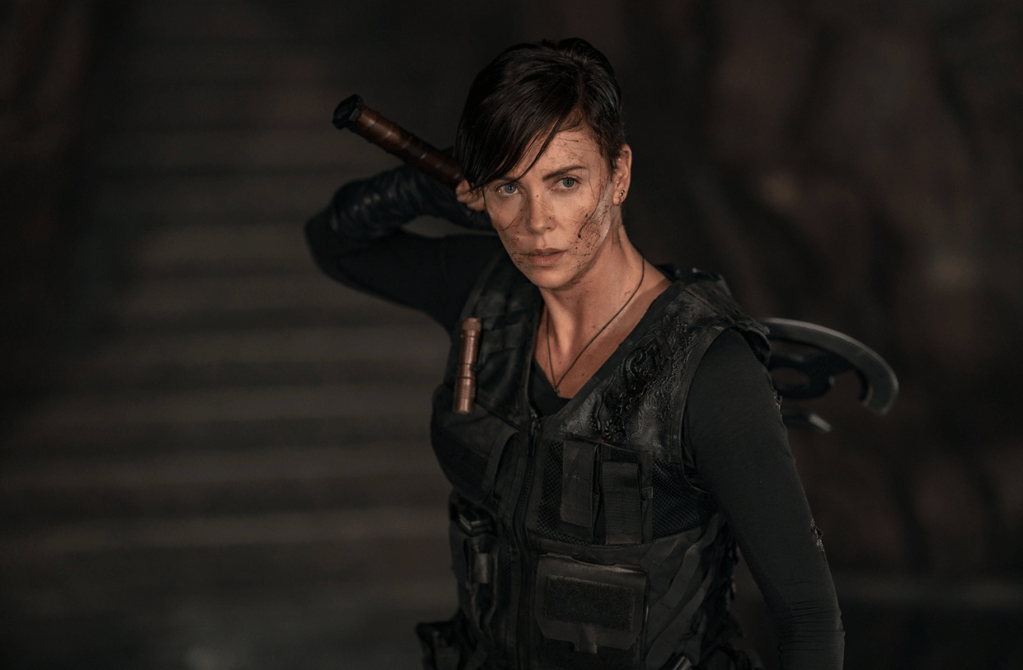
Charlize Theron as Andromache of Scythia.

In fact, the whole film is suffused with a deliberate patience, a hallmark of director Gina Prince-Bythewood, best known for sun-soaked romances like Love & Basketball and Beyond the Lights. Lesser directors might get swept away in the genre, but Prince-Bythewood is willing to the parts speak for themselves, a remarkable move for a superhero movie with remarkable consequences. Imagine, if you will, a Marvel movie with gay characters (already a stretch, considering the outright laughable attempt that Endgame, the twenty-somethingth entry in the franchise, thought was good enough for representation, but stay with me here). They’re being held hostage, and a guard taunts one of them by asking “is that your boyfriend?” What happens now? In a bog-standard superhero movie, we expect the character to look up, some fight music to start playing, the hero to kick the snot out of the guards, and then wipe his brow and say “yeah, he’s my boyfriend.” Which would be, you know, fine! But Prince-Bythewood recognizes this for what it is–a golden opportunity for something more–and gives Joe, one of the immortals, the opportunity for a sublime declaration of love, the kind of soliloquy that would sparkle against a sunset and somehow does the same thing in a prison hold. It is, without exaggeration, the most romantic moment I’ve seen in any movie of 2020, romance or otherwise. And then yeah, sure, they kick the snot out of the guards after, but that part isn’t even on-screen because The Old Guard so clearly knows what is most interesting about its premise. 

When The Old Guard strays away from its central team of immortals, though, the seams start to show. The main antagonist, Harry Melling’s anemic take on a Martin Shkreli type, barely registers as enough of a character to be of any interest; his central plan actually has a fair amount of ethical questioning behind it, but he himself takes too much pleasure in malice for his plans to have the moral weight the movie clearly hopes they do. And his right-hand man, a conflicted ex-CIA member played by the consistently excellent Chiwetel Ejiofor, is never given enough meat to make a meal; his presence in the film rarely extends beyond exposition. They work fine–there’s no real dealbreakers in The Old Guard–but it’s still a relatively sour note in a movie this enjoyable. And rest assured, it is enjoyable. The Old Guard has a checklist of summer blockbuster criteria to meet and crashes into each item head-on. The team moves like men and women with centuries of lethal practice, and the fight scenes are both inventive and (sometimes literally) bone-crunching. Occasional dips in clarity are a bummer–the opening fight in an underground bunker is dim and dresses all its combatants in the same tactical black–but thankfully, the movie gets its act together in little time afterwords and keeps the brutal action in frame, finishing with a fight scene in an office building that’ll have you pumping your fist in glee.


And frankly, a lot about The Old Guard is likely to elicit some kind of joy. It feels like every inch of this movie is better than it needs to be. They could have cast anybody, but they cast Charlize Theron. They could have just slapped some tac gear on the team, but they outfit them with their signature weapons from the time they first resurrected. They could have skimped on the characterization, but they made the characters the focus in a bizarre but welcome choice that grounds the entire proceedings and makes you cheer for Nile, not just because she just cleared a room of baddies, but because you saw what brought her to this decision, and gives both parts equal weight. It is not without faults, but its faults are new faults for the genre, and I’ll also give it kudos for the literal only sequel tease I’ve cared about in years. In more ways than one, I hope The Old Guard is the herald of the new.

Categories
Reviews

Onward – Review

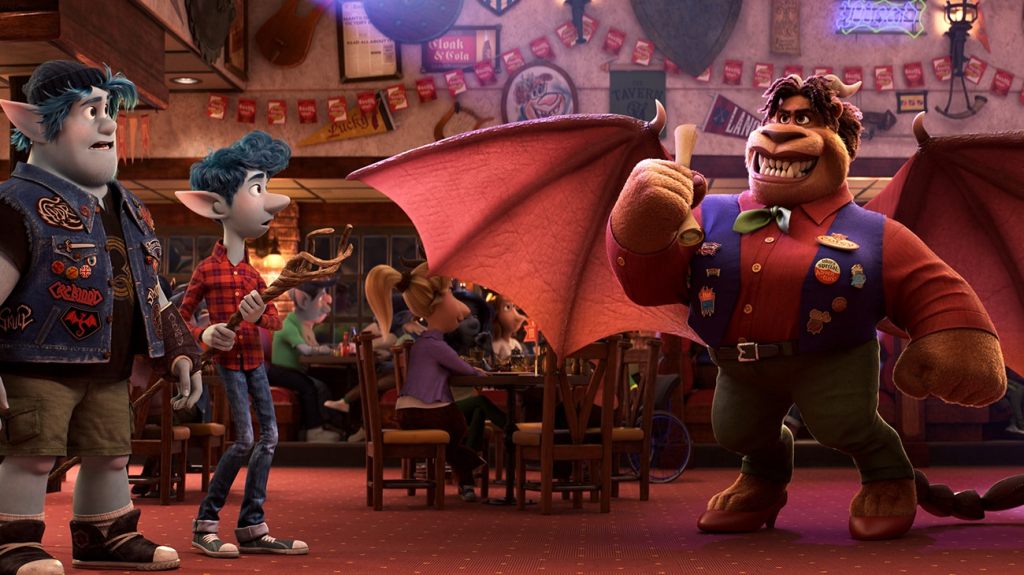
I had a creeping suspicion midway through Onward: there’s no reason this movie had to be set in a fantasy world, and the plot would have worked exactly as well in, say, the middle of Illinois. This is disappointing both as a regular Pixar attendee and an utter sucker for the fantastic, but it’s true; swap in a delay on the acceptance of magic and forget a handful of sight gags, and there’s nothing you’d really lose. I’m not saying this as a doctrinaire–obviously, the existence of centaurs and sprites and forgotten cantrips lets you get away with quite a bit, and I understand why they’re there. But aside from our central characters, their wizard staff, and their ½-resurrected dad, there’s almost nothing to marvel at. It doesn’t break the movie, a competent family road trip, but it’s emblematic of its larger problem: for all its talk of magic, Onward is thoroughly mundane. 

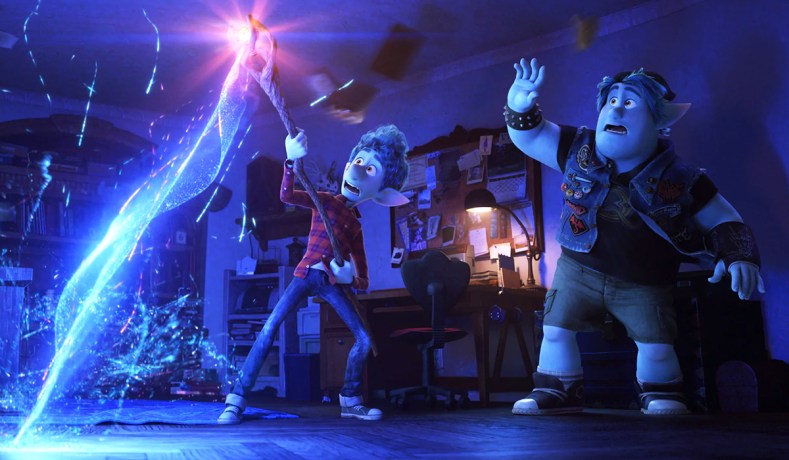
Tom Holland and Chris Pratt play Ian and Barley Lightfoot, a pair of elfin brothers in a fantasy world now wholly moved on from enchantments to electricity. Both brothers never really knew their father, who died when they were young, and on Ian’s 16th birthday their mother reveals his last gift: their father’s magic staff, along with a spell that will bring him back for 24 hours. But when Ian botches the spell and only brings back his father’s legs, the brothers set off to find another magic focus and cast it right before the clock runs out and their dad is gone for good. It should be apparent by this point that Pixar’s doing their usual thing and fishing for heartstrings, but if it sounds a little more crass than usual, that’s because it is. Much of the plots precedes like you’d expect it to–journeys of self-knowledge, empowerment, a comedy chase scene or two–but this time around, the artifice feels more transparent than usual. There’s little connective tissue between scenes, and character and plot arcs begin and conclude with alarming frequency; a dance number closes a game-changing rift, and one character moment is handled with an actual checklist of growth. The film’s main conceit, Ian learning how to cast spells, is not an uninteresting idea, but it’s done so ham-handedly it’s hard to get engaged (Barley quite literally yells that spells have to be cast from your “heart-fire” over and over again until we get what he’s saying by proxy). This feels, at least in part, because Onward doesn’t seem to know what it’s about. It shuffles its feet around “staying connected to your past,” “trust those you love,” and “believe in yourself,” and by the time it finally arrives at “the meaning of family” the movie’s almost done. 

I’m about to criticize this movie some more, so before that happens allow me to interrupt myself and say that Onward isn’t bad. It’s perfectly functional, and functional for Pixar, some of the best living animators, is no small deal. That vaunted animation is, as always, impeccable; the voice actors, from Disney stalwarts Holland and Pratt to newcomers Julia Louis-Dreyfuss and Octavia Spencer, are game and capable; and the plot, as banal as it can be, hits its marks well enough. Nothing here is bad, but everything lacks a certain je ne sais quoi. Maybe it’s because Pixar’s making more movies more frequently than it used to, maybe it’s because Disney is exerting greater creative control, maybe it’s because every animated movie I’ve seen after Into the Spider-Verse has felt just a little less fun in comparison. But whatever the reason, ultimately, I was most disheartened not by what Onward was, but what it wasn’t. 

Chris Pratt as Barley Lightfoot, Tom Holland as Ian Lightfoot, and Octavia Spencer as the Manticore.

Because when Onward finally lets loose and leans into the delightful incongruity of its setting, the results can be, well, magical. Most of the movie exists as no more than a palette-swap–dragons for dogs, mushroom tops for gabled roofs, ogres and cyclops for schoolchildren–but whenever it lets itself grapple with its stated identity, a land built by a magic now forgotten, it becomes a blast. I got my first hint of this with the Manticore’s Tavern, once a hub of adventure run by the fearsome Manticore, now a family restaurant because that brings far fewer lawsuits. It’s not the freshest of bits, but it’s the first time since the inciting incident that the film really feels like it’s doing something worth noting. We get intermittent spurts of activity all the way up until the final scene, an exhilarating setpiece with Onward’s most clever both-worlds design by far. It’s all the more a shame, then, that the rest seems almost defiant in its refusal to let itself have fun with its own premise. I’m reminded of Zootopia, a movie with another far-out premise that absolutely overflowed with creativity and sheer visual glee. Onward sets itself up for the same kind of ingenuity, but is almost afraid to engage with it. We never get to see what a car designed for centaurs looks like, we’re not allowed different classroom desks for a populace demonstrably variable in size and species, and the motorcycle-riding pixies, an idea the film is clearly proud of, don’t get any kind of screentime to explain how they’re doing what they’re doing. We just see motorcycles driving, and are asked to fill in the blanks ourselves. 

Again, truly, it isn’t a bad movie. It is, however, a markedly disappointing one. Almost all Pixar movies, even the ones I don’t really care for (Up and Inside Out are the big two) reliably swing for the fences, which is why it’s such a letdown that Onward never really strives for anything beyond competence. And maybe, for some folks, that’s enough; Pixar is playing to its core proficiencies here, and it’s doing so with a significant amount of talent and experience. But I’ve come to expect more, and frankly, much like the world it inhabits, Onward is in desperate need of a little more magic.

Categories
Reviews

Emma – Review

You’re likely not alone if you’ve never heard of Emma, a much-adapted but lesser-known and underpraised Jane Austen novel about someone she described as “a heroine whom no one but myself will much like.” I suspect that only diehard Austen fans or big nerds had much foreknowledge of this particular piece, but as a member of both groups, I was looking forward from the moment this new adaptation was announced. Emma was, for years, my favorite Austen; I’ve grown up to realize just how young and stupid I was for not properly appreciating Pride and Prejudice, but as a younger and stupider reader it was gratifying to read a story about a character who, despite her best intentions, can’t help but ruin the people around her. It also helps that Emma is, as a rom-com, more reliant on the com—think Much Ado over Romeo and Juliet. Its lovers are cute and quarrelsome, and their eventual get-together is the kind of thing that’ll make you fondly smile more than openly weep. You might weep a little because of how fondly you’re smiling (I certainly did) but Emma, both the book, movie, and character, are all shooting for entertainment over capital-L Love. And come to think of it, this movie—“emma.”, as I categorically refuse to style it—has quite a bit in common with its main character. It’s “handsome, clever, and rich,” a vibrant romp of a film that’s unafraid to flex its comedic chops. It’s also, like Emma, a little bit too clever for its own good, and I wish it’d let the people around it handle themselves. 

I can’t possibly introduce Emma better than Austen did, so I’ll just copy the opening lines here to get us into this thing: “Emma Woodhouse…seemed to unite some of the best blessings of existence; and had lived nearly twenty-one years in the world with very little to distress or vex her.” Emma is, broadly, about Emma’s selfish and occasionally catastrophic attempts at matchmaking and their ensuing fallout, but it’s also about the way that she and the rich folks around are nearly incapable of understanding a circumstance other than their own. The movie keeps this general frame, but smartly gives more screentime and plot heft to Harriet, (again, Austen does it best, so I’ll let her make the introductions as) “a natural daughter of somebody,” a poor and functionally orphaned young woman that Emma quickly befriends and seeks to better, with dramatically varying results. Emma is as much about her as it is about Emma, and this helps illuminate the contrast between the two and drive home Emma’s thoughtlessness and eventual transformation into sharper relief. The rest of the plot isn’t always as careful—Emma feels like it keeps debonair Frank Churchill or town bore Mrs. Bates in the movie largely out of necessity rather than dramatic purpose—but that’s not a dealbreaker in a movie this fun to watch. 

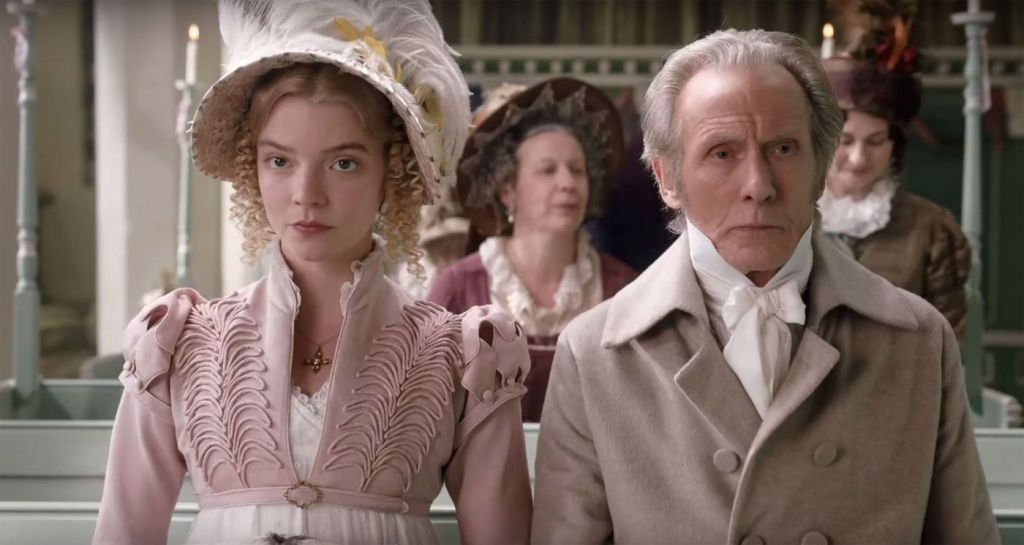
Anya Taylor-Joy as Emma and Bill Nighy as Mr. Woodhouse.

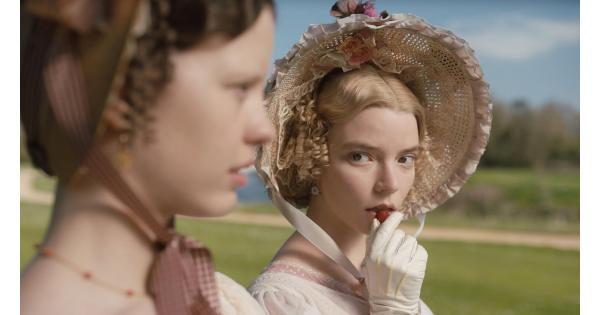
Because Emma really, really is funny. Or rather, it’s droll, but it’s packed with drollity, the kind of humor that won’t send you howling but guarantees an amused chuckle about once every minute. The film makes a smart choice leaning into the comedic leanings of the original novel and goes, well, not for broke, but about as broke as an authentic Austen period drama can reasonably go, pushing right up against the intrinsic borders of its genre. Everything feels a little preternatural, from the acting choices (e.g. Bill Nighy’s tendency to hop into place) to the blocking (commonly and intensely theatrically sitting on a couch). And the costumes! What costumes! I’m hardly well-versed on the subject, but the costume and makeup design all feel deliberately and delectably overboard. Emma’s hair is wound into absurdly tight spirals. Mr. Elton, a sleazy preacher, is drowning in a frock at least one size too big. Nearly every male character is craning their neck to see over the absurdly high starched collars. Again, I’m no expert, and it’s entirely possible these are period-appropriate and accurate looks, but even if they are, they’re chosen with such evident care and precision that almost every screenshot of Emma could elicit a laugh on its own. 

This endeavor to pack the movie with a distinctly un-packable wry humor, though, does start to wear thin when taken as a whole. There’s only so many times that Anya Taylor-Joy, as tremendously talented as she is, can stifle a scoff at someone’s behavior before we start expecting her to look at the camera like a 19th-century Jim Halpert. Having satisfactorily established that Emma’s kind of a jerk, Emma keeps trying to play it for laughs, at least an hour after we stopped laughing the first time, and while the joke never really gets bad it can certainly edge into tiresome, especially considering how the actors can expand to fill the silence. When Emma takes a break from winking and lets its actors act, it becomes riveting–there’s a scene between Emma and Elton in a snowbound carriage that lets both Taylor-Joy and Josh O’Connor unleash some impressive talent, and then, with an audible “clunk,” the lever is flipped back to Comedy and Mr. Elton does a funny scream. It’s a shame, because director Autumn de Wilde, making her feature debut here, is obviously quite talented at both comedic and dramatic work, but seems to lack the surehandedness of, say, a Nora Ephron or Armando Ianucci to let them cohabitate. 

But that’s no great matter. I’m greatly looking forward to the next films de Wilde makes with more experience under her belt, and in the meantime, Emma’s a more than capable movie. It’s an energetic and thoroughly entertaining period piece, and if you’re willing to overlook its clunkier aspects–which you should, and unless you’re a very sour soul, will–you’ll indeed be energized and thoroughly entertained. Very thankful that this new adaptation gives me yet another reason to do what I’ve been doing for a decade already and heartily recommend Emma

Categories
Reviews

The Invisible Man – Review

Hey, remember the Dark Universe? Back in 2017, when Universal Pictures tried to do the Marvel thing to its many classic movie monsters and give them a shared universe to fight and be fought in? And which, much like its supposed jumpstarter, The Mummy, was dead on arrival? Remember that? No? Good. You, like me, might have been beset and surrounded by cinematic universes, and afraid of having to use your own two eyes and moments of your only life to watch a trailer where the Bride of Frankenstein does a cool flip over the Creature from the Black Lagoon or whatever, made the commendable choice to stop caring. Flash-forward with me now–it’s 2020, and the fracturing of the Dark Universe has had at least two notable positive consequences:

  1. There is not and will likely never be any such movie as The Bride’s Cool Flip Over The Creature From That Other Movie, Remember?
  2. Instead of being yoked to a hoary crossover series of middling movies, The Invisible Man is tightly constructed, constantly unnerving, and genuinely pretty great. 

This intro is admittedly overblown, but no matter how many times I edited this review I felt like I needed to keep it to communicate how thrown I am by the quality of The Invisible Man, a movie whose elevator pitch (scion of the Dark Universe, produced by Blumhouse, inspired by a century-old property, movie about a woman getting beaten up a lot) has very little in its corner. I held my nose and made the dive for Elizabeth Moss, a consistently excellent actor, and I’m so thankful I did, because, turns out, it’s my favorite movie I’ve seen this year. 

The Invisible Man takes its title and license from the 1933 movie (and 1897 novel) of the same name, but besides its obvious central conceit it really doesn’t have much in common with either. This is a good thing, because this 2020 adaptation is, with all due respect to H.G. Wells, more nuanced than its original source, a story largely about an invisible dude who just loves killing and little else. This version, however, opens on Moss’ character, Cecilia, waking up next to someone, grabbing a go-bag, and sneaking out of a palatial seaside estate. It doesn’t tell us why, but the conclusions it lets us draw are correct, and this tense opening is not only strikingly effective as a horror setpiece, but as a mission statement–The Invisible Man, aside from its obvious central conceit, does not draw its tension from implausible sources.

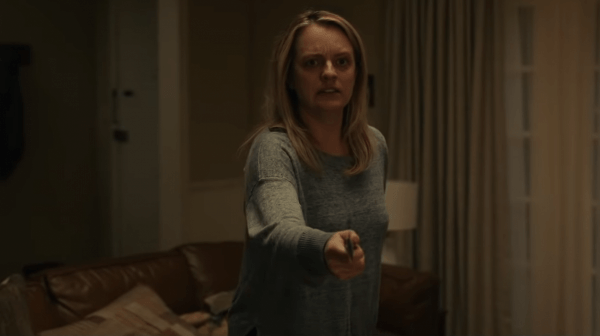
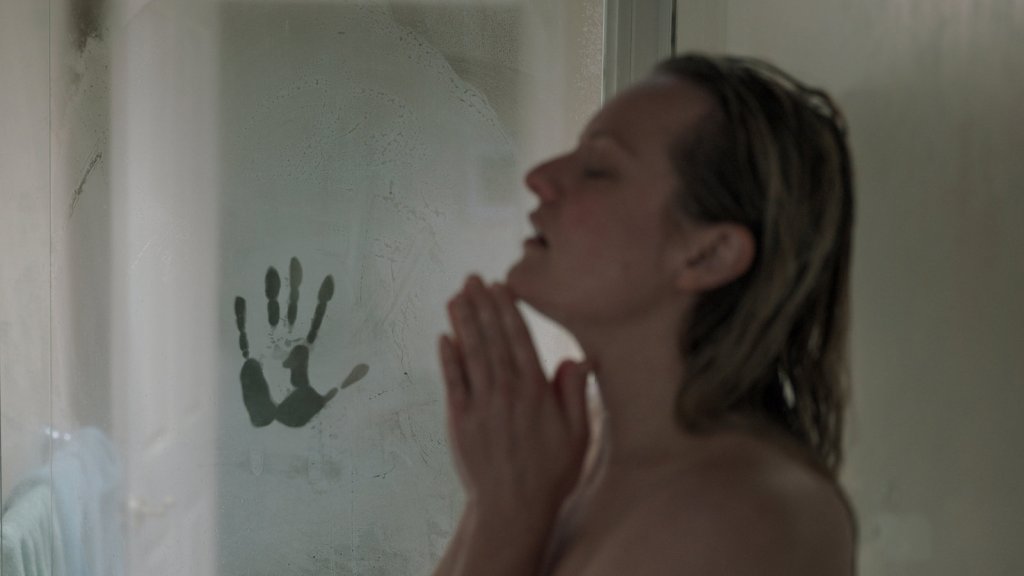
Oliver Jackson-Cohen as Adrian Griffin and Elizabeth Moss as Cecilia Kass.

The horror of Cecilia’s abusive boyfriend Adrian works perfectly as a dramatic device, and smartly, writer and director Leigh Whannell never attempts to stray far from it. Rather, The Invisible Man couches its plot entirely in the physical and emotional havoc an abusive ex could wreak, and treats the invisibility as more of a tool in Adrian’s arsenal than a central point. I’d call it clever, but clever feels dismissive of its power, so let’s say inspired–not a stretch, since it results in a cleanly constructed and shockingly resonant thriller that, despite being about abuse and gaslighting, never dips its toes into exploitation. This, too, is surprising, since it’s pretty uncommon for a wide-release film of any genre, let alone horror, to exhibit such delicacy and restraint, but it really, really works. We never have to watch a scene of the abuse that drove Cecilia out, a cheap tactic that would tank the movie. Instead, Whannell trusts Moss to tell the story and the audience to understand it, and this not only frees the film from a significant amount of sleaze but makes the whole thing more precise for its excision. It’s a Swiss watch; nearly every piece fits together in seamless ways, and the ending these pieces eventually make is so fitting and concordant I nearly cheered. 

It’s helped, of course, by formidable work from Elizabeth Moss, making an early play for the best leading performance the Academy will still ignore because it hates genre movies. Her Cecilia is immediately and wholly root-for-able, a harrowed woman determined to claw her way out of the hell thrust upon her, and Moss not only brings her signature steel but expertly measures out its emergence. Cecilia’s ingenuity and resolve aren’t a sudden heel-turn from her initial fear to step outside her house, they’re a natural growth, and Moss does a stellar job tracking this change from scene to scene. She’s helped, in turn, by an excellent supporting cast (special honors go to Aldis Hodge’s immensely likeable James) and a surprisingly versatile camera. Stefan Duscio’s cinematography is unconventional but shrewd; it’s thankfully unafraid to linger on Cecilia’s expressive face or a hallway where something might emerge. Something rarely emerges, obviously, but its capability to produce tension from this absence is impressive. Every other shot is just a little off-center, just a second too long, and in a deeply deliberate way that feels downright Hitchcockian. 

In fact, Hitchcock is an apt comparison. The Invisible Man is a well-crafted white-knuckler that’s rife with the same kind of sickening and (mostly) powerless voyeurism. Whannell’s got a long way to go before reaching a seat on that same pantheon, sure, but after the pulpy Upgrade and now this superb razor-wire chiller, he’s made some steps. It isn’t perfect–it’s still inhabited by the thousand natural logic skips that horror films are heir to–but they’re hard to notice and easy to forgive when the movie as a whole is this meticulously outlined and effectively made. The Invisible Man is the best thriller of the year so far, a nauseating film that, even with its central flight of fantasy, will keep you in fear of a clear and present danger. 

Did you get that great pun? I’ll say it again. The Invisible Man is about a clear and present danger. Right? Get it? The review’s done, but did you get it?

Categories
Reviews

The Lodge – Review

It feels like I’ve seen every inch of The Lodge before, and that’s not necessarily a bad thing. With its singular central location, potboiler plot, and small cast at each other’s throats, it walks on well-trodden ground, the kind of creepshow that companies like A24 thrive on. If you’re a horror buff, you’ll instantly recognize A24 as the company that brought you Hereditary, and if you watch The Lodge, you’ll instantly recognize a lot more, because plot aside, The Lodge cribs most of its tonal playbook from Hereditary, from the ominous and largely symbolic dollhouses to the leads with questionable morals and sanity (to the, Big Spoiler, mother waking up from a dream standing over the child’s bed with a weapon in her hand). The people that made The Lodge are clearly fans of Ari Aster, and while I appreciate their enthusiasm I wish they’d managed more of his technique. 

Riley Keough plays our main character, the quietly troubled Grace, but we don’t see much of her until at least fifteen minutes into the movie, and instead watch who she’s stepping in for: Laura, a young mother of two children, who’s told her husband wants to finalize their divorce to marry Grace and then promptly and dramatically removes herself from the equation. It’s an effective opening, and a natural segue into the meat of the story–Grace, the new stepmom, is charged with watching the kids over Christmas in the remote and titular Lodge. If you’ve seen any given horror film in the last decade you’ve probably already figured out the general thrust of what happens next, as Grace and the kids (Lia McHugh and Knives Out’s excellent Jaeden Martell) start turning against each other and themselves, unsure of anybody’s full share of responsibility in the nightmare. The problem, though, and the thing that muffles some of The Lodge’s impact is that it has a terrible poker face. It structures its entirety around the mystery–it wants you to wonder who’s at fault, but it’s almost immediately apparent who’s at fault, and the movie is so excited to be here that it can’t help revealing its “twist” almost an hour early. It throws a few red herrings in, and the discerning viewer can whiff them from a mile away, but it spends so much time trying to establish these red herrings that they start to snarl into their own plotlines both we and the movie know aren’t going anywhere. I’m not a pedant [pause for laughter] and I’m not going to say this foreknowledge will ruin your enjoyment of the movie, but I did start getting bothered with the way it neuters the characters. It’s a solid cast doing solid work, but it feels like all of them, and Keough in particular, are kept from making significant choices by a script that’s afraid they’ll give away the ending. She’s a talented actor, and I wished The Lodge gave up on keeping me in the dark and just let her act. 

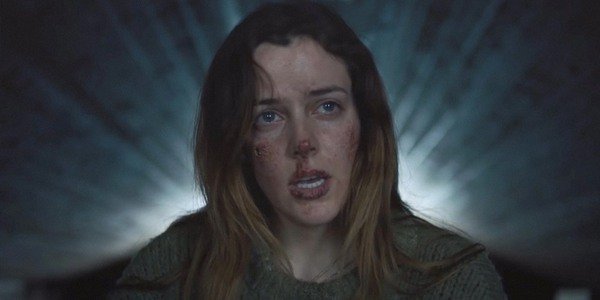
Riley Keough as Grace.

So yes, The Lodge isn’t shakingly unpredictable or innovative, but what it does, it does well. Interior shots are framed with a blinding white outside the windows, isolating the proceedings to an uncomfortable degree. There’s a standard bevy of low-budget and high-concept frights, utilized in variously clever ways, and though it feels like directors Veronika Franz and Severin Fiala (of the similarly creepy but too-clever-by-half Goodnight Mommy) occasionally throw a dart to pick the next scare, they’re doing so with such aplomb and consistency that it’s hard to begrudge them. It doesn’t manage the monolithic terror of Hereditary, its clear inspiration, but it’s also, you know, scary, a troublingly rare feature in horror films. There’s not a lot else to say here, and you knew whether or not you’d like this movie from the second you saw the trailer. I knew as I was watching this film it’d be a short review, so if you’ll indulge me for a second, I’d love to expound on the major part of it that let me down (and soapbox a bit along the way). 

In its efforts to hide its ending, The Lodge resorts to a number of maybe, maybe not hallucinations and dream sequences. They’re unnerving, sure, but in a vague way, and in a way that increasingly obfuscates what’s actually happening–and that, to me, is a failure to observe one of the core tenets of film: clarity. Take this with a grain of salt. I act and write, but I don’t make movies, I just say mean things about them on the internet, so this is wholly just me telling smarter and more capable people how to do their jobs. But there’s a distinct difference between coherence and clarity. In broad strokes, I read clarity as “what’s happening” and coherence as “why’s it happening,” and I could give or take coherence, because coherence is for nerds, and when cinema’s unique visual joys rub up against coherence I’ll bet on a cool-looking movie any day. Take Holy Motors, one of my favorites of all time, and its bullheaded refusal to make any kind of sense that I can decipher. It’s exquisite, a constant delight to experience, so I don’t mind that I also find it completely incomprehensible. But clarity, at least to me, is absolutely vital. Mad Max: Fury Road, a movie I believe I’m on record as liking quite a bit, is a sterling example of what clarity can do for a film–the shell is all traditional action, sure, but the keystone of both the editing and cinematography seem to be clarity, making sure the viewer is precisely aware of the topography, and it’s this (among many things) that makes Fury Road such an insane joy. I remember walking out of the theatre and realizing it’s not that I didn’t like watching car chases, I’d just never seen a good car chase. Or if we’re talking clarity, contrast the fight scenes in John Wick with Taken. The thematic choices in The Last Black Man In San Francisco with Green Book. The anything of Pacific Rim with Pacific Rim: Uprising. Communicate whatever it is effectively and clearly, and that’s half the battle. I keep coming back to Hereditary in this review because of its general tonal similarity with The Lodge, but also because of its astonishing clarity–you are acutely and painfully aware of what’s happening, every second you’re watching. You may or may not know why what’s happening is happening, and that’s fine, because the agonizing rupture of the Graham family is enough to wrestle with on its own. The Lodge is trying to execute a similar maneuver, but so much of it lacks clarity that it consequently doesn’t have the same impact; when it finally throws its punches you don’t get hit because it wouldn’t just punch you clearly.

Does that make sense? Probably not. Go watch Hereditary again. And if you liked it and you’ve got some money to burn go see The Lodge, too, if for nothing else than to make sure Riley Keough keeps getting that A24 money she so justly deserves. 

Categories
Reviews

Fantasy Island – Review

As I’ve reviewed thus far, I’ve eschewed giving any hard grades—stars, numbers, letters, or otherwise—for a handful of reasons. All art, and all criticism of it, is wholly dependent on the individual viewing it, and besides, to assign a film some kind of quantifiable value seems to miss the point of reviews. The first film I wrote about here, CATS, is a trainwreck by nearly any measure, but I’m still excited to see it again; The Revenant is a technically competent and well-made movie that I loathe with every fiber of my being. Data can’t find the full measure of a film, and reviews shouldn’t presume objectivity.

Except this one, because with those caveats out of the way, let me now say that Fantasy Island is, objectively, the worst movie I’ve ever seen in theatres. 0/10, two thumbs down, F-minus. Again, objectively.

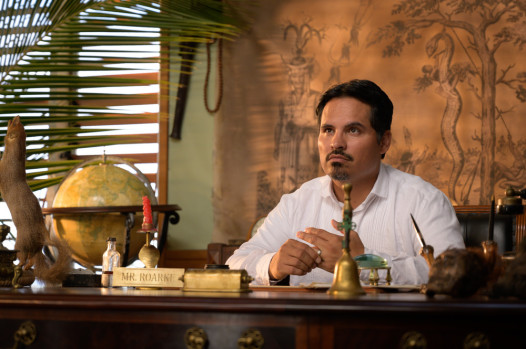
From the moment the concept was teased, I was baffled—for those of you who don’t know, Fantasy Island was originally a late 70s-early 80s TV show, starring Ricardo Montalbán as Mr. Roarke, the proprietor of an island getaway that brought its guests’ wildest dreams to life (and here imagine a dramatic pause before you read) though those dreams are not always what they expect. I’ve seen little of the original series, but what I saw was chintzy and amusing fare; think a more lighthearted Twilight Zone and you won’t be far off the mark. In at least one episode, Mr. Roarke encounters the Devil, and they talk like they’re both certain the other is cheating at penny blackjack. So who is this new movie for? The people familiar with Fantasy Island 1.0 will be shocked at its reduction to a cheap, crass “careful what you wish for” vehicle, and the people who aren’t will snicker every time a character says “fantasy” with a straight face. 

Hollywood’s lack of original ideas is a drum well beaten, though, so let’s give them that. If we must be this psychotically exhaustive in our graverobbing, I’ll even grant that “Fantasy Island, but more,” isn’t an awful pitch for a modern horror film. The idea of a Needful Things vacation service, self-indulgent wish fulfillment on an island resort taken to its logical conclusion, is evocative on its own. You’ll note, though, the keyword “logic,” something the screenwriters had apparently only heard tales of from distant shores. The movie spends a significant chunk of its runtime trying to quantify, through various mouthpieces, how its mythology works, which would be impressive dedication if any of it made a lick of a sense. 

Michael Peña as Mr. Roarke.

So let’s set aside the utterly wild explanation of why Mr. Roarke is here in the first place, the island’s simultaneously cavalier attitude towards and tenuous capabilities of resurrection, and the untold multitude of skips and errors, and just play along with me for a second–let’s pretend you’re a screenwriter for Blumhouse. Your task is simple today: you’re to find a suitable fate for two of your characters, a pair of gently dim party bros, played by Ryan Hansen and Silicon Valley’s Jimmy O. Yang. They (presumably) love to party, but are (presumably) beset by some kind of troubles that prevent this (you’ve already given up on writing any of this exposition). Their fantasy, their ultimate wish, is to “have it all.” How do you, the malicious and technicality-minded genie in this bottle, doom them to their grisly but PG-13 destiny? Their ambiguous wording means you could drive a truck through this loophole, so let’s get to work. If you’re me, shooting from the hip, you might do some entry-level body horror–maybe “having it all” includes “all knowledge,” which grotesquely swells their heads and/or drives them mad. Maybe “having it all” meant “consuming it all,” and they’d be forced, Se7en-style, to gorge themselves to death on their new possessions, and if we’re feeling particularly naughty, some unwilling participants. If, however, you’re one of the poor people that actually wrote Fantasy Island, “having it all” means “you have a great big party in a cool house with models, but the house actually used to belong to a cartel or whatever, and it gets raided by a black ops team trying to recover their cocaine, so you have to do an action scene to rescue each other. Now, I guess, you’ve learned the true consequence of having it all, as long as ‘all’ is someone else’s drugs, specifically.” 

Every inch of this plot is just as devoid of sense. Towards the end, if you ignore several critical elements, Fantasy Island appears to be putting its pieces together in a halfway interesting manner, until it sweeps those pieces off the table and petulantly announces it’s doing a different, more inane ending now, and then does the exact same thing once more for emphasis. The final picture it appears to be gunning for is vengeance for past misdeeds, a kind of Diet Silent Hill, but it doesn’t have anywhere near the wit, patience, or talent to achieve it. And the swirling void of the plot’s incoherence drags in everything around it. The action sequences, of which there are many, are filmed with shots so shaky it feels like the camera operator was actively falling down in every take. The collective charm of Michaels Peña and Rooker, both capable actors, is completely drained by dialogue that never moves faster than a plod, and the leads, some of whom I’ve both seen and enjoyed before, I’m no longer sure were ever good at acting in the first place. 

Look, there’s a lot I can forgive. I’m a grouch, but I like to think I can be lenient, and I get that this particular movie is yoked to a series of tricky obligations–it didn’t have much in the way of budget or shooting time, it’s a torture movie rated for teens, it’s bound to an IP several decades old that people either don’t care about or will extremely care about. But here’s the thing that wholly sinks Fantasy Island: it’s not scary. Not even once. It struggles even being intentionally uncomfortable. It’s a horror movie, or it’s supposed to be, but at no point can it scare you, and that’s the final nail in a coffin that already has so many nails it’s more metal than wood. 

Design a site like this with WordPress.com
Get started