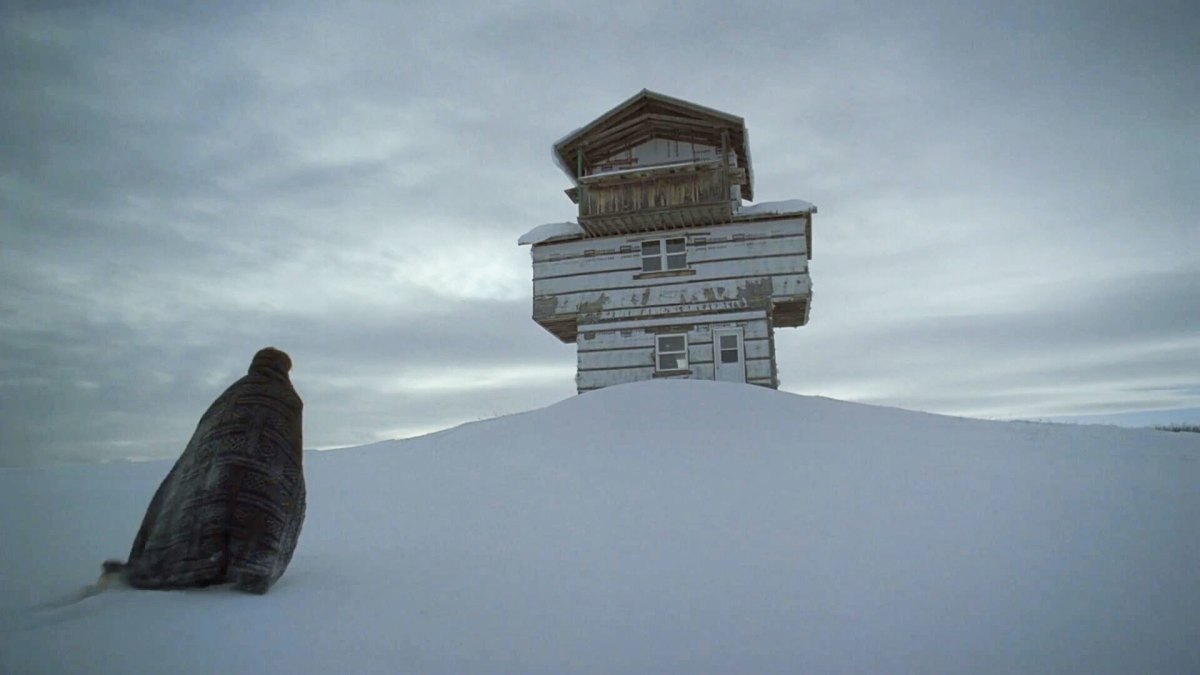
It feels like I’ve seen every inch of The Lodge before, and that’s not necessarily a bad thing. With its singular central location, potboiler plot, and small cast at each other’s throats, it walks on well-trodden ground, the kind of creepshow that companies like A24 thrive on. If you’re a horror buff, you’ll instantly recognize A24 as the company that brought you Hereditary, and if you watch The Lodge, you’ll instantly recognize a lot more, because plot aside, The Lodge cribs most of its tonal playbook from Hereditary, from the ominous and largely symbolic dollhouses to the leads with questionable morals and sanity (to the, Big Spoiler, mother waking up from a dream standing over the child’s bed with a weapon in her hand). The people that made The Lodge are clearly fans of Ari Aster, and while I appreciate their enthusiasm I wish they’d managed more of his technique.
Riley Keough plays our main character, the quietly troubled Grace, but we don’t see much of her until at least fifteen minutes into the movie, and instead watch who she’s stepping in for: Laura, a young mother of two children, who’s told her husband wants to finalize their divorce to marry Grace and then promptly and dramatically removes herself from the equation. It’s an effective opening, and a natural segue into the meat of the story–Grace, the new stepmom, is charged with watching the kids over Christmas in the remote and titular Lodge. If you’ve seen any given horror film in the last decade you’ve probably already figured out the general thrust of what happens next, as Grace and the kids (Lia McHugh and Knives Out’s excellent Jaeden Martell) start turning against each other and themselves, unsure of anybody’s full share of responsibility in the nightmare. The problem, though, and the thing that muffles some of The Lodge’s impact is that it has a terrible poker face. It structures its entirety around the mystery–it wants you to wonder who’s at fault, but it’s almost immediately apparent who’s at fault, and the movie is so excited to be here that it can’t help revealing its “twist” almost an hour early. It throws a few red herrings in, and the discerning viewer can whiff them from a mile away, but it spends so much time trying to establish these red herrings that they start to snarl into their own plotlines both we and the movie know aren’t going anywhere. I’m not a pedant [pause for laughter] and I’m not going to say this foreknowledge will ruin your enjoyment of the movie, but I did start getting bothered with the way it neuters the characters. It’s a solid cast doing solid work, but it feels like all of them, and Keough in particular, are kept from making significant choices by a script that’s afraid they’ll give away the ending. She’s a talented actor, and I wished The Lodge gave up on keeping me in the dark and just let her act.
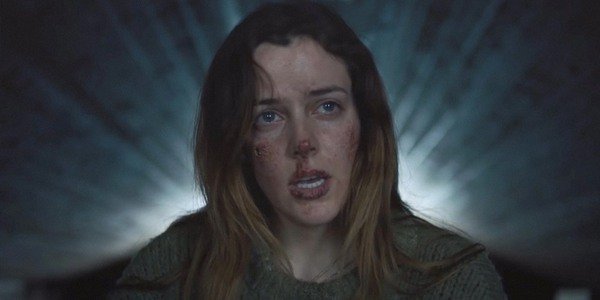
So yes, The Lodge isn’t shakingly unpredictable or innovative, but what it does, it does well. Interior shots are framed with a blinding white outside the windows, isolating the proceedings to an uncomfortable degree. There’s a standard bevy of low-budget and high-concept frights, utilized in variously clever ways, and though it feels like directors Veronika Franz and Severin Fiala (of the similarly creepy but too-clever-by-half Goodnight Mommy) occasionally throw a dart to pick the next scare, they’re doing so with such aplomb and consistency that it’s hard to begrudge them. It doesn’t manage the monolithic terror of Hereditary, its clear inspiration, but it’s also, you know, scary, a troublingly rare feature in horror films. There’s not a lot else to say here, and you knew whether or not you’d like this movie from the second you saw the trailer. I knew as I was watching this film it’d be a short review, so if you’ll indulge me for a second, I’d love to expound on the major part of it that let me down (and soapbox a bit along the way).
In its efforts to hide its ending, The Lodge resorts to a number of maybe, maybe not hallucinations and dream sequences. They’re unnerving, sure, but in a vague way, and in a way that increasingly obfuscates what’s actually happening–and that, to me, is a failure to observe one of the core tenets of film: clarity. Take this with a grain of salt. I act and write, but I don’t make movies, I just say mean things about them on the internet, so this is wholly just me telling smarter and more capable people how to do their jobs. But there’s a distinct difference between coherence and clarity. In broad strokes, I read clarity as “what’s happening” and coherence as “why’s it happening,” and I could give or take coherence, because coherence is for nerds, and when cinema’s unique visual joys rub up against coherence I’ll bet on a cool-looking movie any day. Take Holy Motors, one of my favorites of all time, and its bullheaded refusal to make any kind of sense that I can decipher. It’s exquisite, a constant delight to experience, so I don’t mind that I also find it completely incomprehensible. But clarity, at least to me, is absolutely vital. Mad Max: Fury Road, a movie I believe I’m on record as liking quite a bit, is a sterling example of what clarity can do for a film–the shell is all traditional action, sure, but the keystone of both the editing and cinematography seem to be clarity, making sure the viewer is precisely aware of the topography, and it’s this (among many things) that makes Fury Road such an insane joy. I remember walking out of the theatre and realizing it’s not that I didn’t like watching car chases, I’d just never seen a good car chase. Or if we’re talking clarity, contrast the fight scenes in John Wick with Taken. The thematic choices in The Last Black Man In San Francisco with Green Book. The anything of Pacific Rim with Pacific Rim: Uprising. Communicate whatever it is effectively and clearly, and that’s half the battle. I keep coming back to Hereditary in this review because of its general tonal similarity with The Lodge, but also because of its astonishing clarity–you are acutely and painfully aware of what’s happening, every second you’re watching. You may or may not know why what’s happening is happening, and that’s fine, because the agonizing rupture of the Graham family is enough to wrestle with on its own. The Lodge is trying to execute a similar maneuver, but so much of it lacks clarity that it consequently doesn’t have the same impact; when it finally throws its punches you don’t get hit because it wouldn’t just punch you clearly.
Does that make sense? Probably not. Go watch Hereditary again. And if you liked it and you’ve got some money to burn go see The Lodge, too, if for nothing else than to make sure Riley Keough keeps getting that A24 money she so justly deserves.

 Movies That Are Worse Than “Mad Max: Fury Road” (2015)